
Twin-Wire Robotic MIG Welding for
High-Deposition Manufacturing
Deposit more filler metal and shorten cycle times on high-deposition applications.
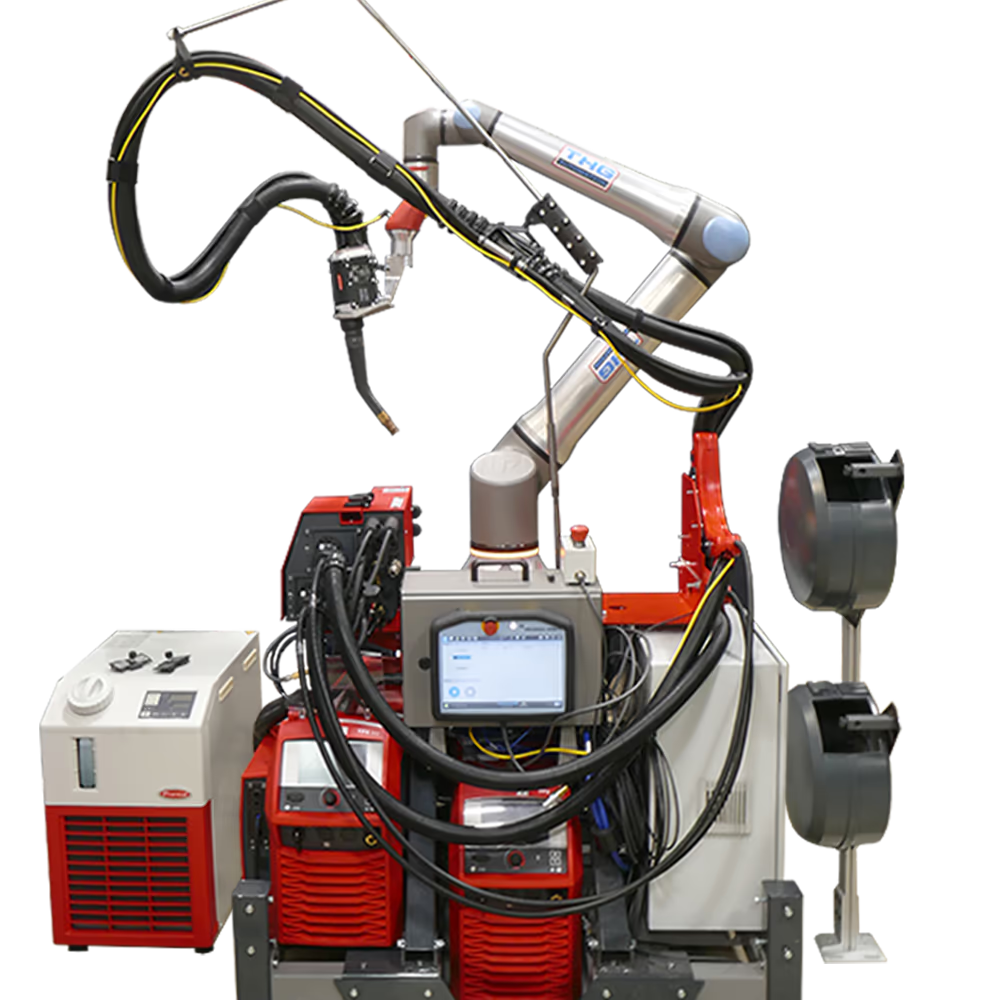
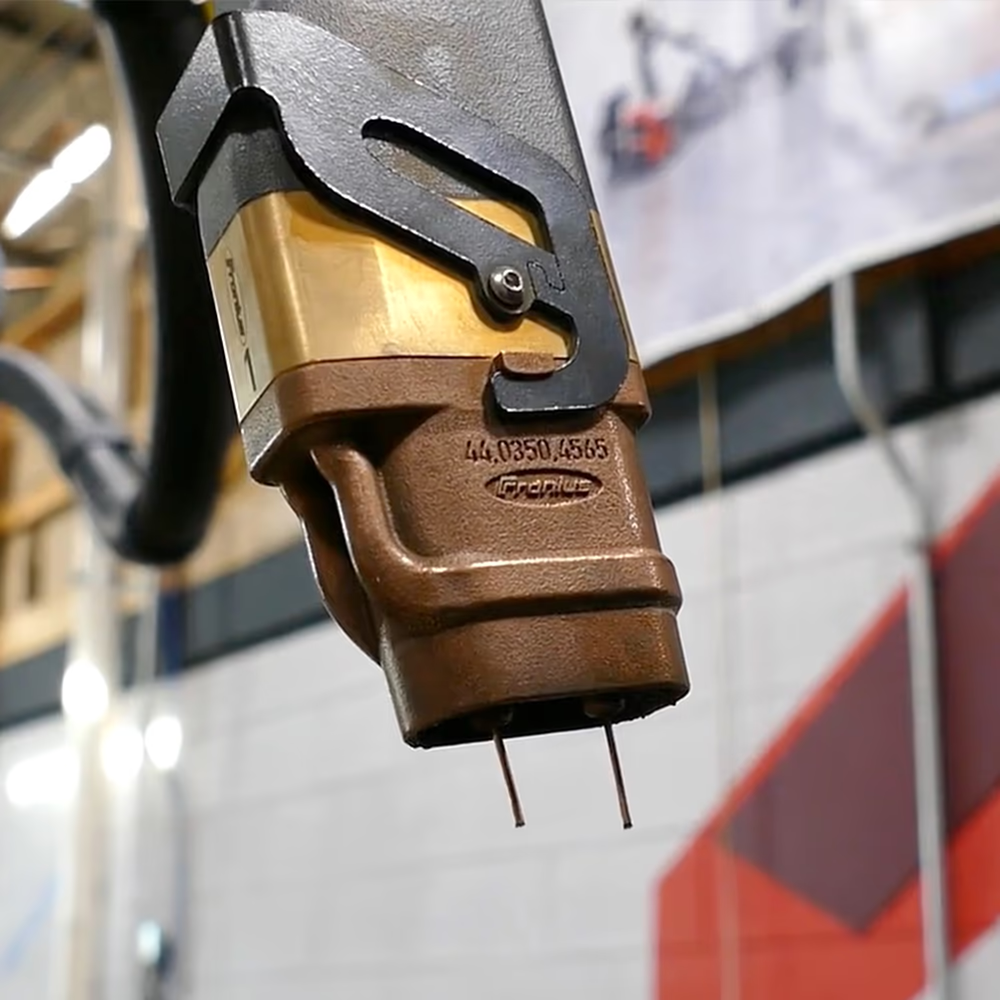
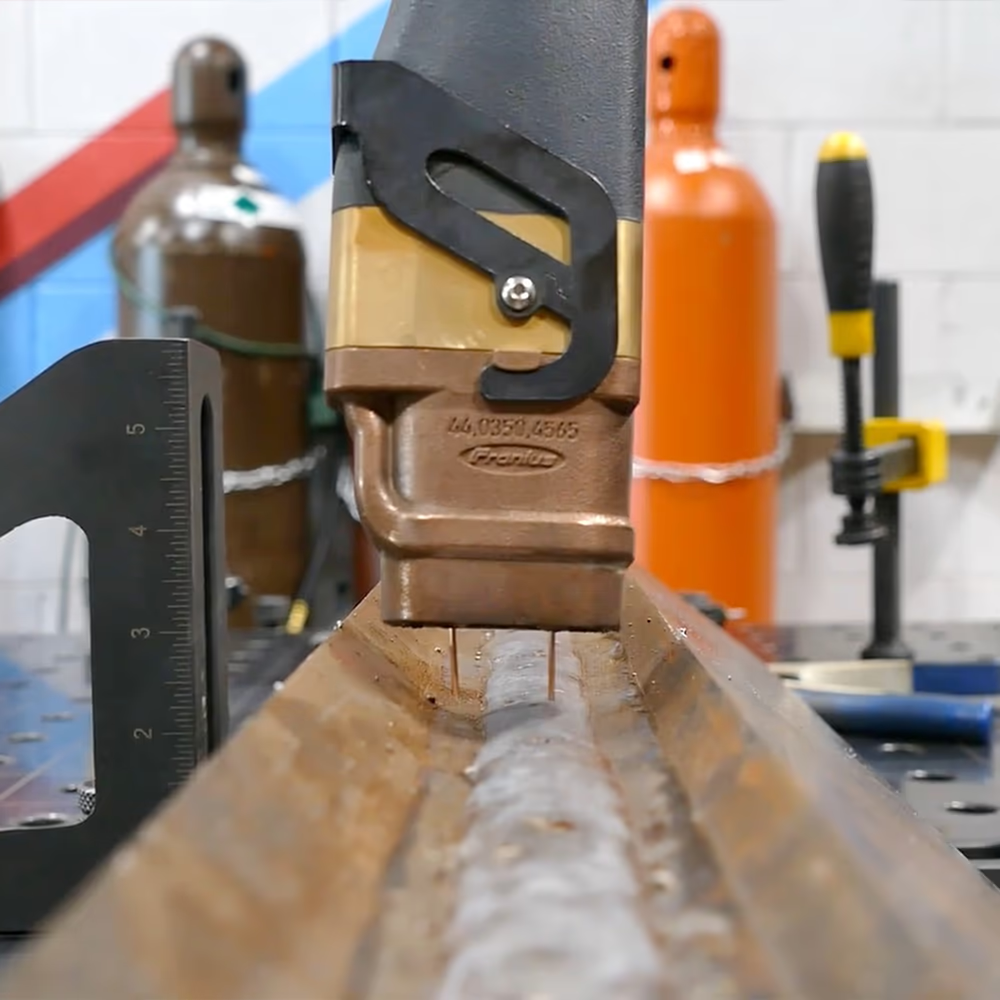
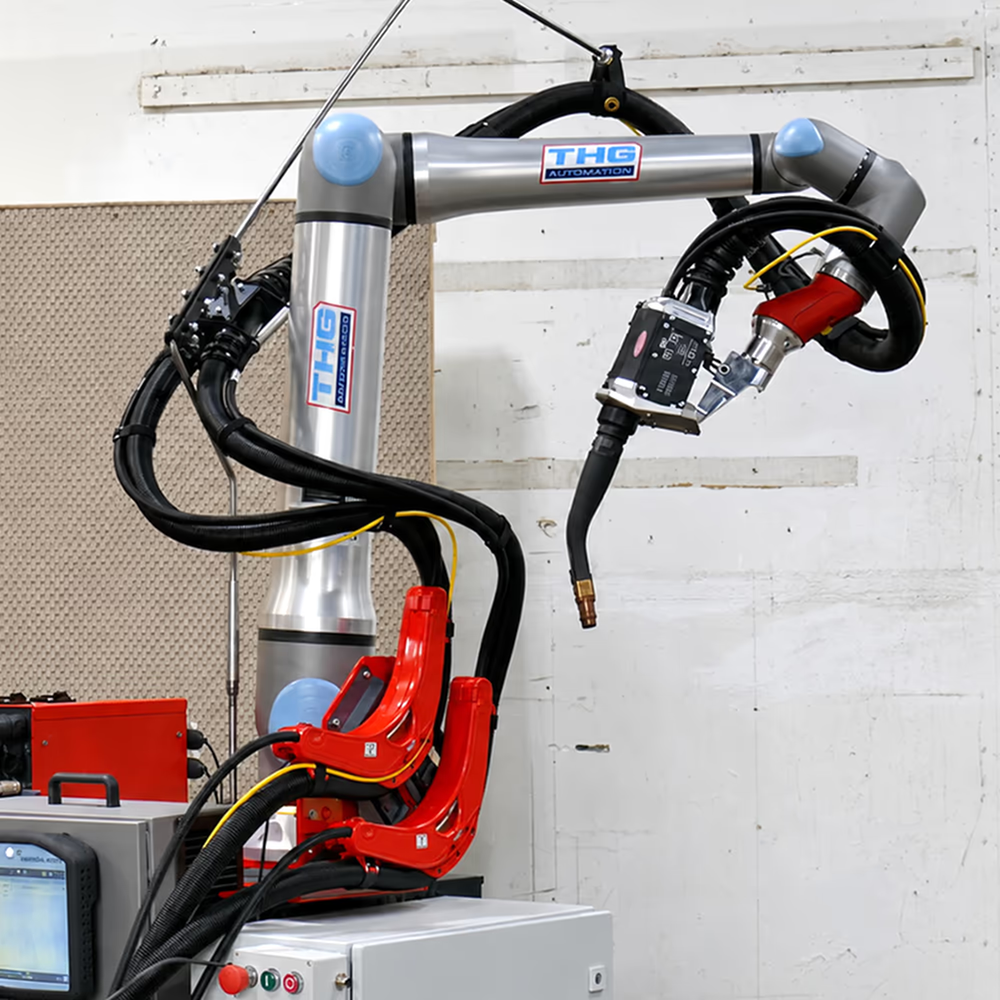
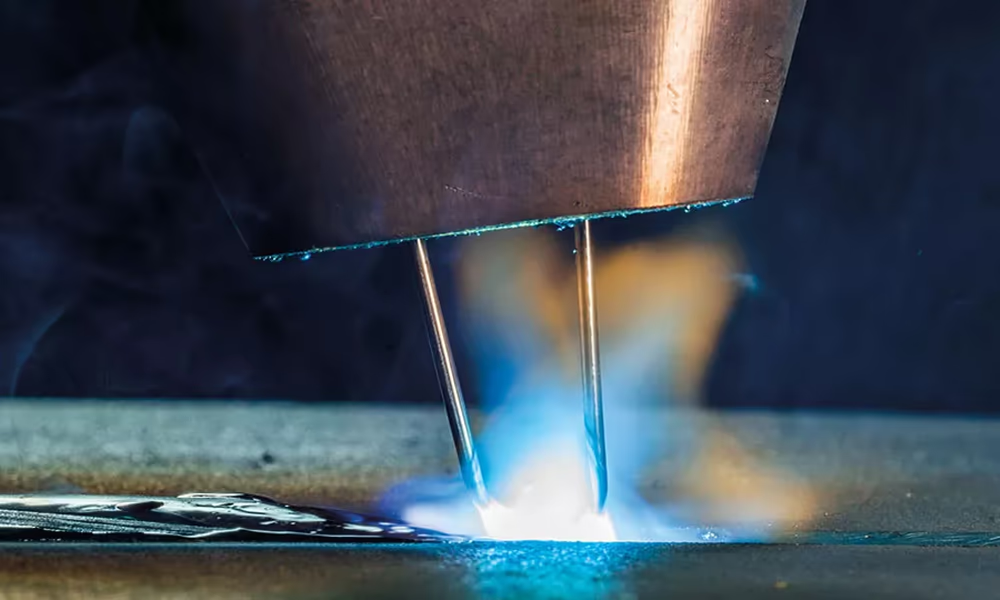
THG Twin-Wire puts two independently controlled MIG wires to work on one robotic weld.
Up to 55 lb/hr deposition rate
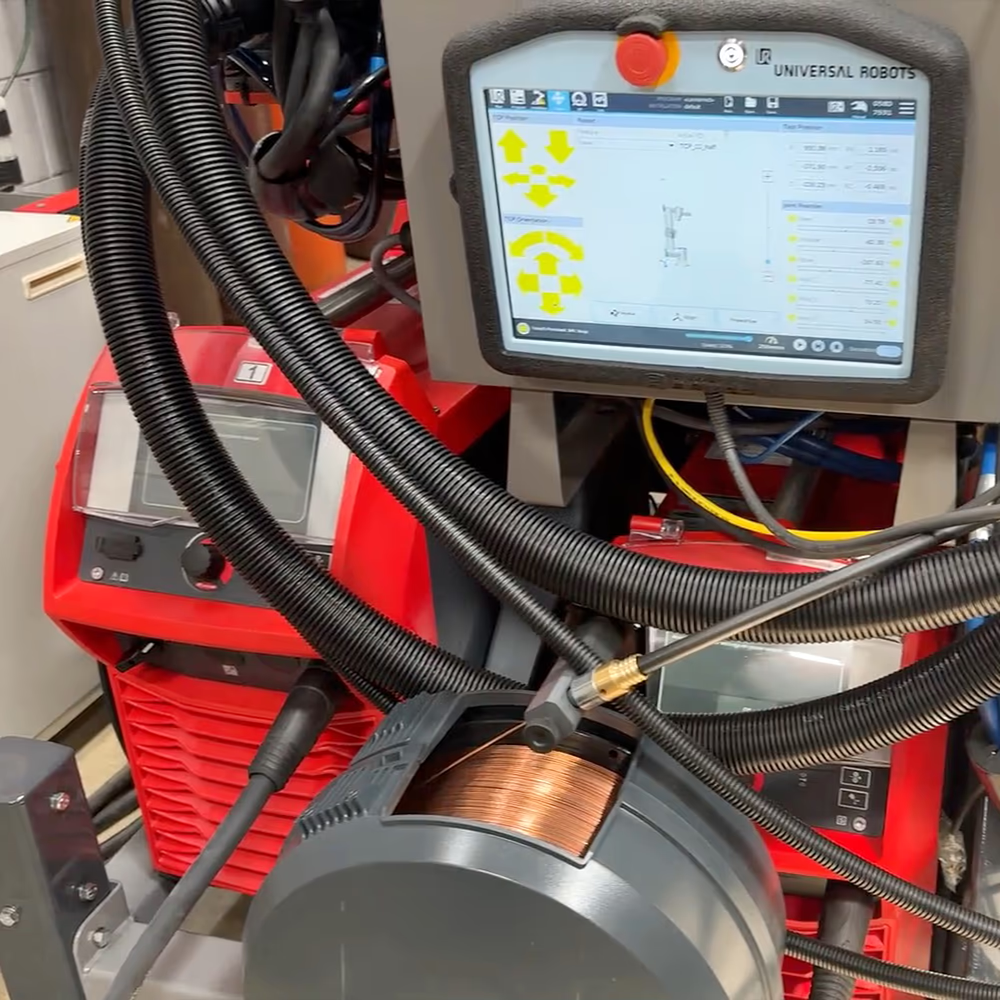
Two independently controlled Fronius TPS/i wire systems
Push, Push/Pull, PMC, and CMT capability






See THG Twin-Wire MIG Demo
55 lbs/hr
Maximum deposition rate.
157 IPM
Up to +75% Higher welding speed
vs. single-wire MIG.
Up to +30%
Greater penetration vs. single-wire MIG.
Two Wires. More Metal Per Hour.
Twin-Wire is built for welds where conventional single-wire MIG spends too much time filling the joint. Use it for industrial, heavy-duty structural manufacturing and general thick metal welding where deposition matters.
Where Twin-Wire Changes the Welding Math
Some manufacturers just need high deposition, or robotic welding doesn’t make economic or productivity sense. That’s why THG Automation has designed the Twin-Wire for the following applications.

Heavy Multi-Pass Welds
Deposit more filler metal per pass to reduce the number of layers required to complete large groove welds.
Thick Plate & Pipe
Increase deposition and penetration on structural, pipe, and heavy-fabrication welds where single-wire cycle time becomes the bottleneck.
Cladding & Hardfacing
Cover larger areas faster for buttering, cladding, hardfacing, and other applications built around depositing substantial volumes of weld metal.
WAAM
Use high deposition rates for wire arc additive manufacturing applications where build rate directly affects production time.
Two Wires. Independent Control.
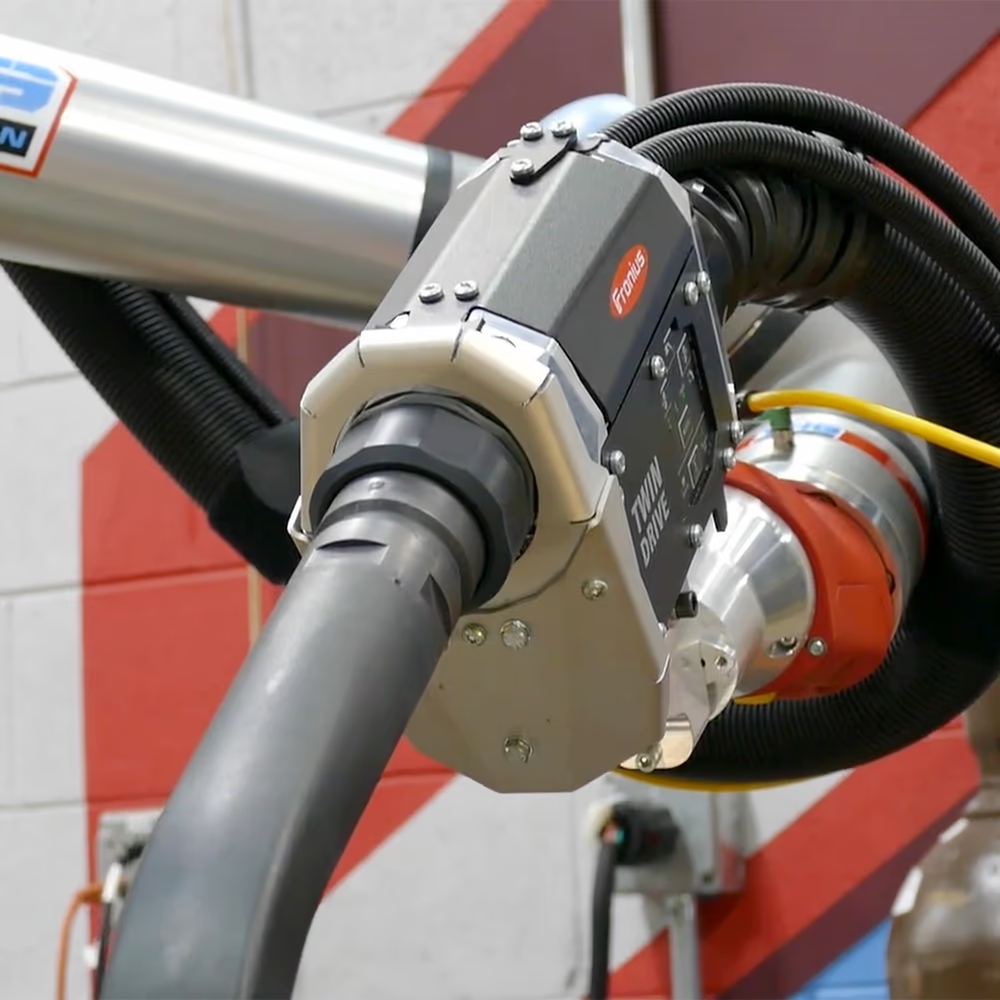
THG’s Twin-Wire lets two TPS/i systems independently control the lead and trailing wires, so you can run them separately or together and tune each side of the weld.

01 / Feed
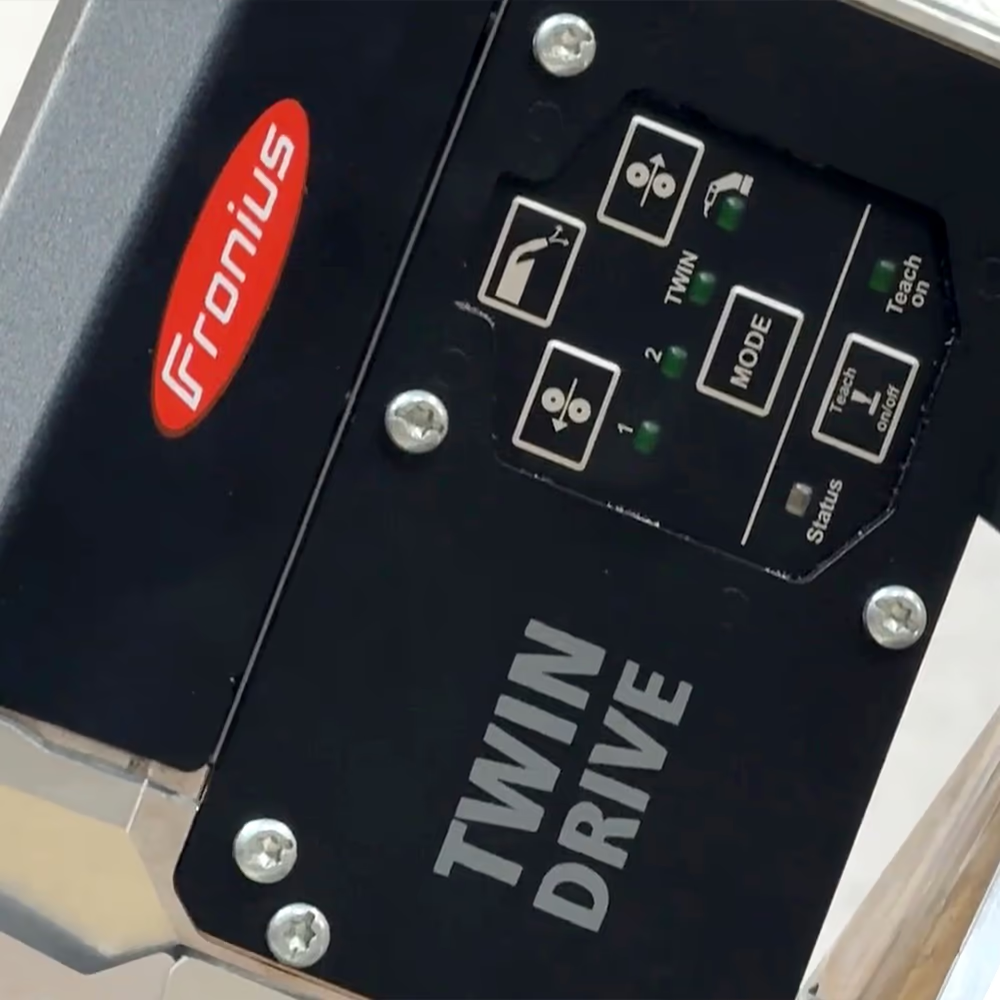
Control each wire independently. Run the two wire feeds independently or in tandem to match the weld procedure.

02 / Aim
Adjust each torch-tip angle. Set the two wire angles individually to influence penetration, bead profile, and filler placement.

03 / Cool
Keep the torch working under load. Through-channel coolant in the gas nozzle and an integrated chiller support higher duty cycles while reducing consumable wear.
Built Around Fronius
TPS/i TWIN Technology
THG integrates Fronius TPS/i TWIN technology into the collaborative robotic platform, combining high-deposition tandem MIG with THG programming, fixturing, motion, and application support.
Supported Materials
Carbon steel
High-strength steel
Stainless steel
Aluminum
Nickel alloys
Fit the THG Twin-Wire Welding Around Your Parts
THG Twin-Wire add-on supports broad THG add-on platform parts to let you fully take advantage of collaborative robotics in heavy manufacturing. Your system should handle complex, large parts, in various production environments.
Coordinated Motion
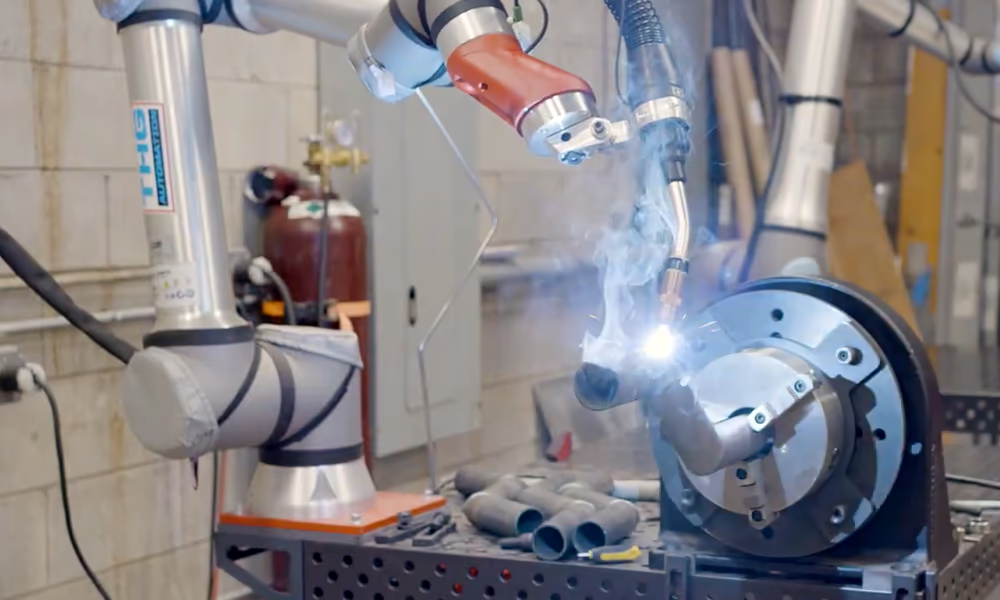
THG Coordinated Motion synchronizes the UR cobot and positioner for consistent torch angle and travel speed.
Positioners
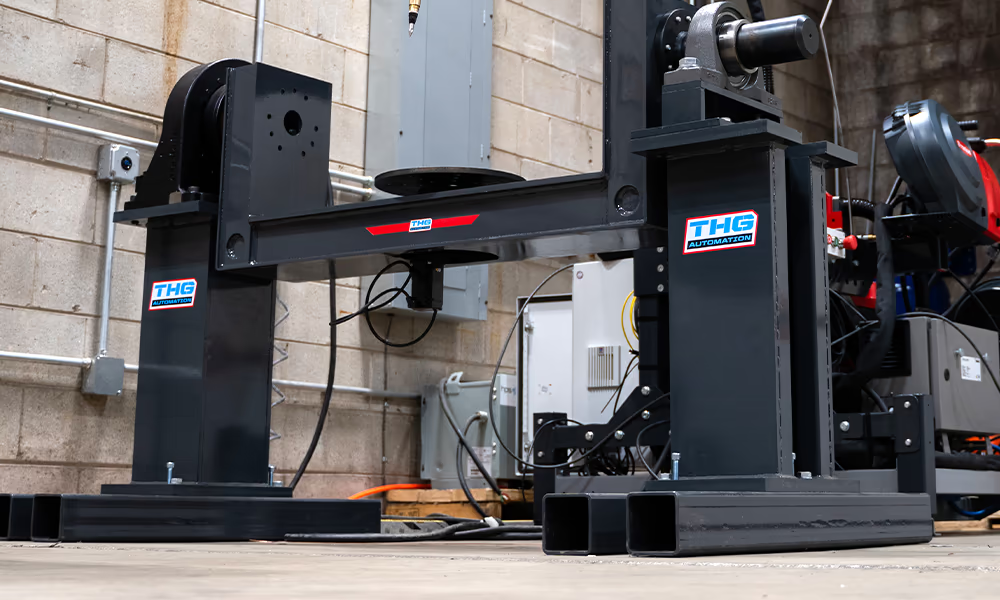
THG offers 400-lbs and 1,100-lbs servo-driven positioners for controlled rotation and improved weld access.
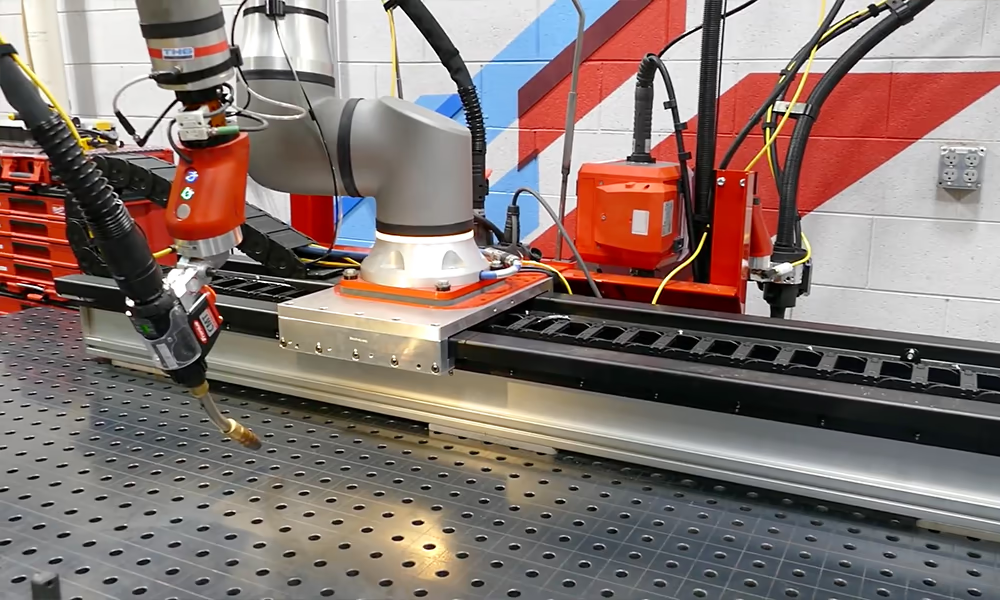
CobotRunner Linear Rail
THG linear tracks extend cobot welding reach by 2, 4, or 6 meters for larger weldments.
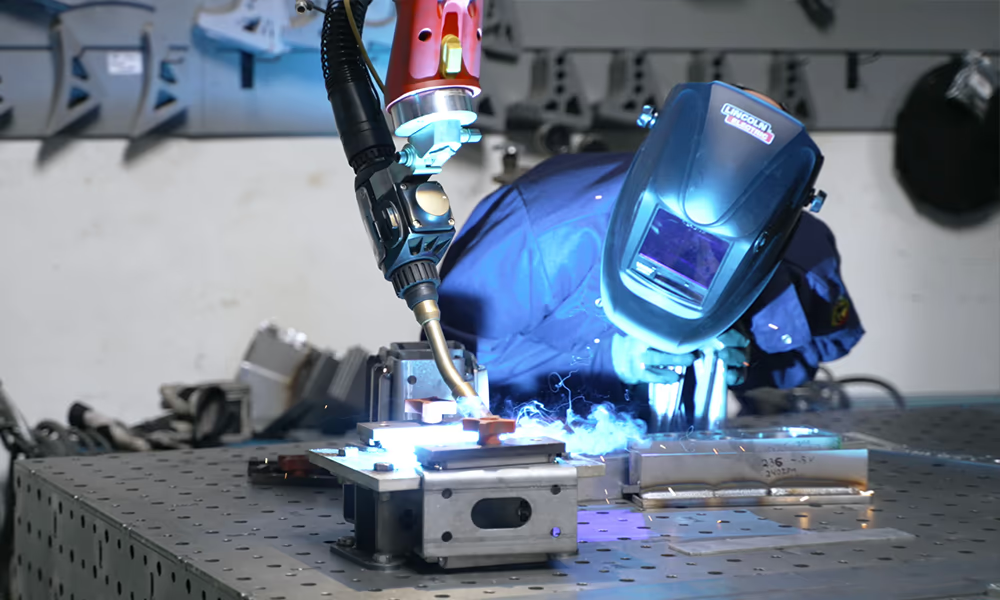
Advanced MIG Processes
Use Fronius CMT, Pulsed MIG, PMC, and LSC to control heat input and reduce spatter.
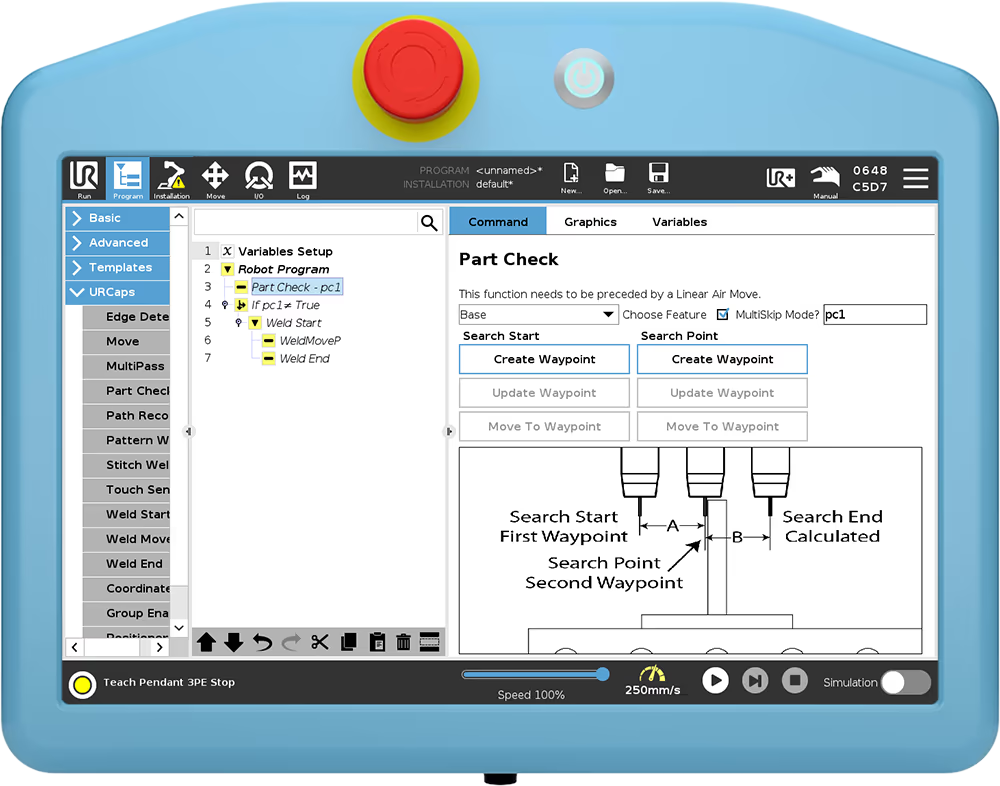
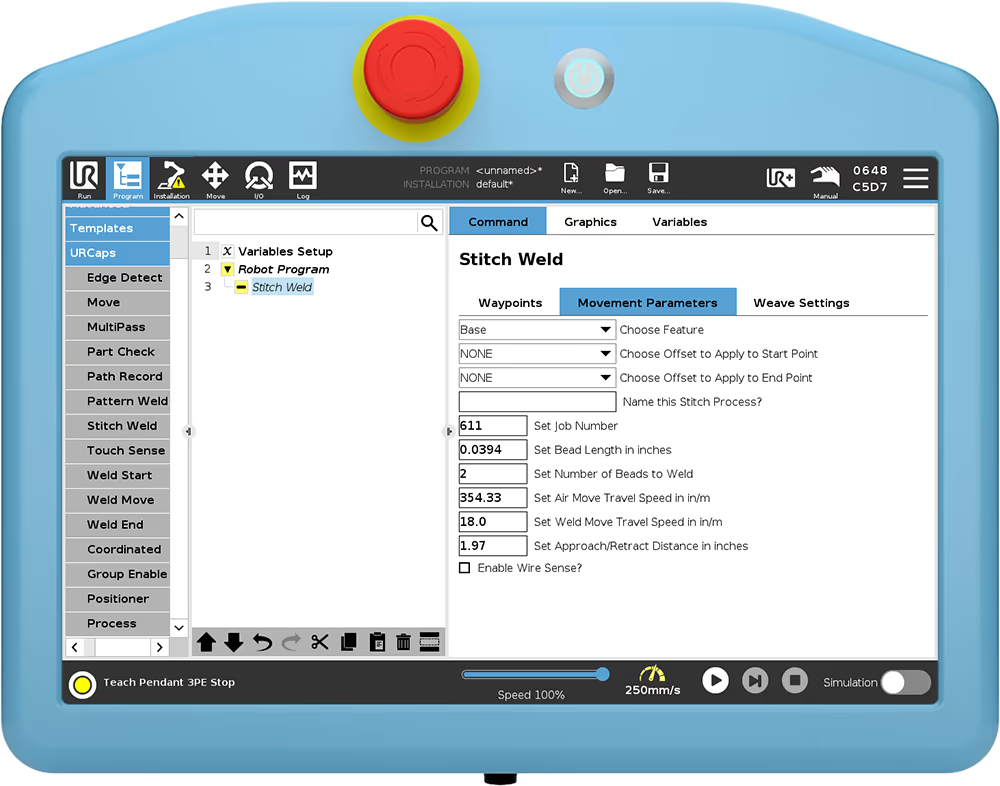
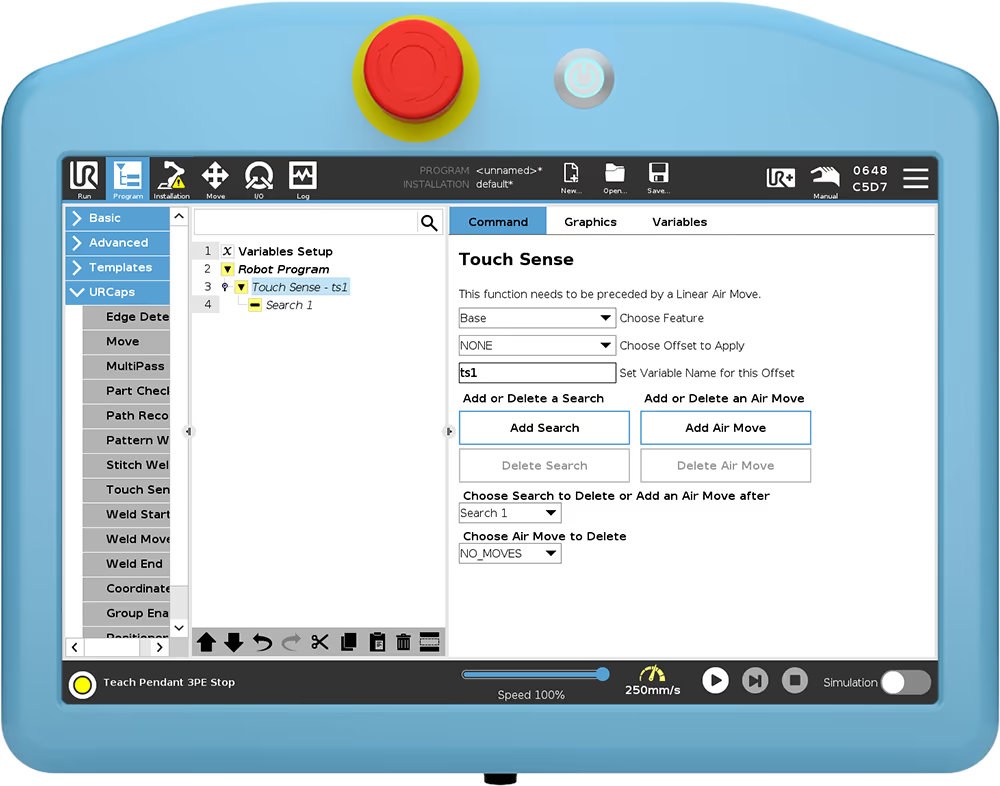
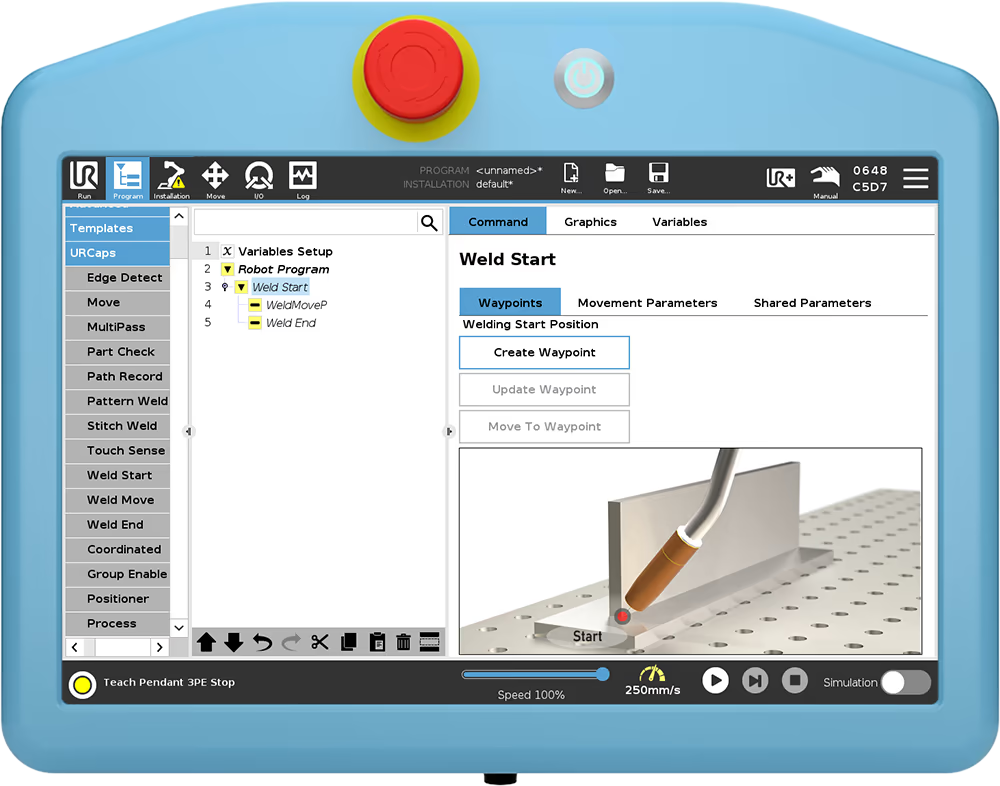
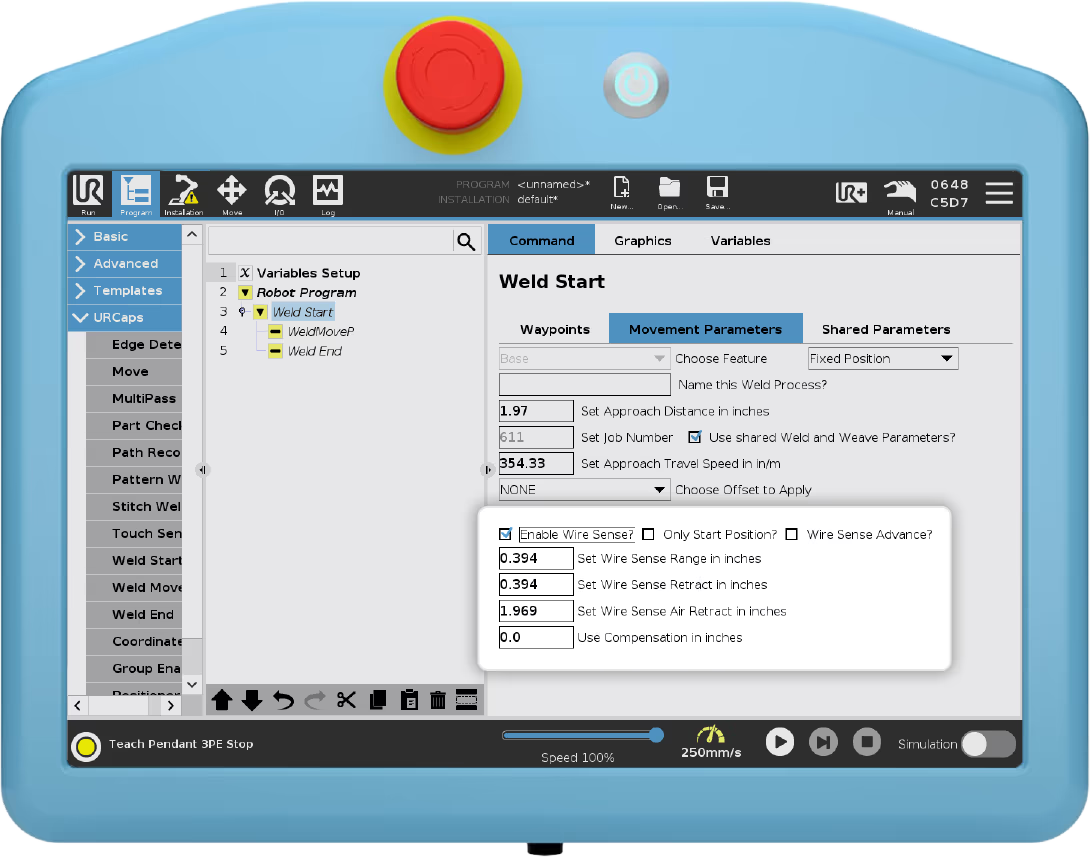
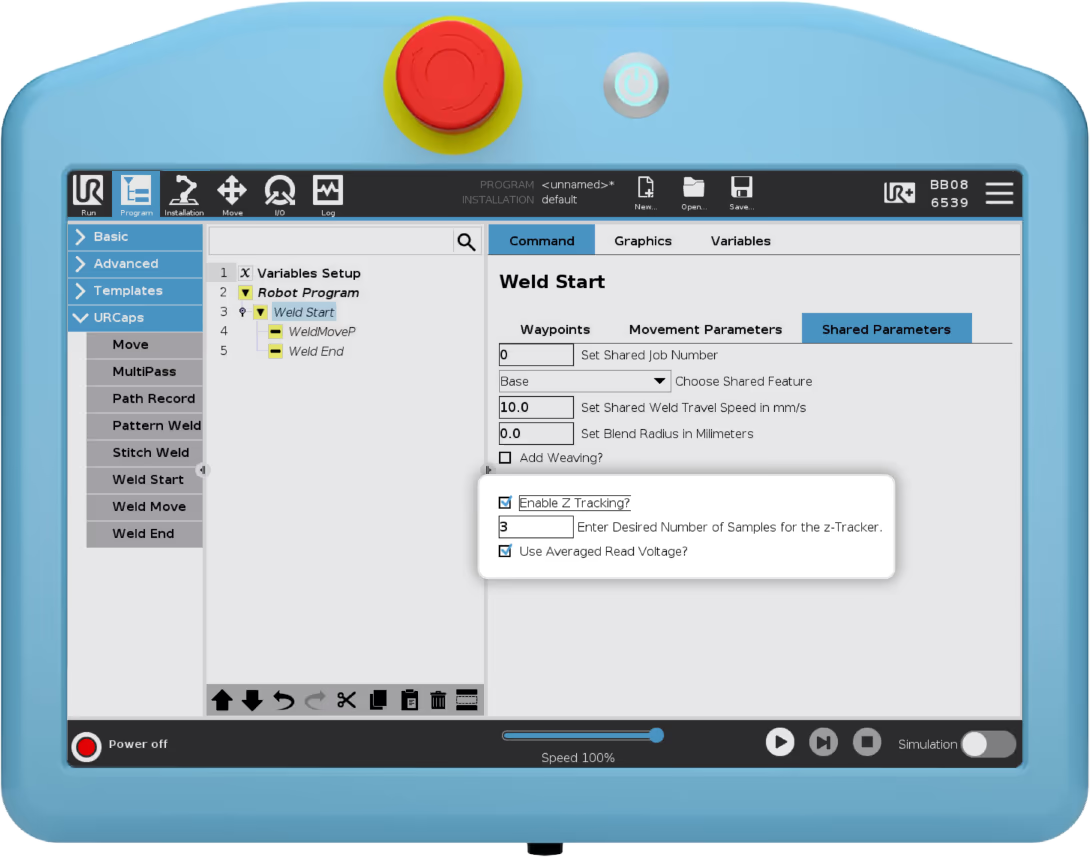
THG URCap Software.
Program Twin-Wire Welding In Minutes.
No code programming. Use the intuitive THG URCap app to easily program your parts. Use positioners, coordinated motion, simple, or complex welds, all from the same app.
Integrated with THG’s positioner and control architecture.
Supports single-axis and multi-axis positioners.
The program runs both the robot and the positioner in Coordinated Motion.
THG proprietary URCap
Designed for welders
Full power source integration
Advanced welding and cutting motion and sensing capabilities programmed in minutes
Customer Testimonials
Results From the Shop Floor
Small Race Shop Scaled Production 7× with a Collaborative Robotic Welding System
4X Productivity Gain with Collaborative Laser Welding Robots
How PikRite Solved Labor Shortages with Robotic MIG Welding
Built and Supported Where You Are
Looking for robotic welding automation in your region?
Contact THG Automation to discuss availability and support in your country.

United States
Design, integration, and support for manufacturers across the U.S.

Canada
Design, integration, and support for manufacturers across Canada.

Australia
Design, integration, and support for manufacturers across Australia.
Book a Demo.
See the THG Twin-Wire in Action.
Let’s discuss your parts and show you what’s possible. We’ll help you choose the right THG configuration you need today, with room to expand as your production needs grow.
Common Questions
What is twin-wire MIG welding?
Twin-wire MIG uses two independently controlled welding wires through one robotic torch to increase deposition and welding speed compared with conventional single-wire MIG.
How much weld metal can THG Twin-Wire deposit?
THG Twin-Wire supports deposition rates up to 55 lb/hr, depending on the material, wire, joint, and welding procedure.
Can the two wires operate independently?
Yes. The two wire-feed systems can operate independently or in tandem, allowing the process to be configured around the weld.
What materials can THG Twin-Wire weld?
Twin-Wire supports carbon steel, high-strength steel, stainless steel, aluminum, and nickel alloys when properly configured.
Which MIG processes are available?
THG Twin-Wire supports Push and Push/Pull configurations with PMC and CMT process capability.
Why does Twin-Wire use a UR20?
The larger UR20 supports the more robust twin-wire torch and hose package required by the system.
Can Twin-Wire reduce the number of weld passes?
Yes, on suitable high-deposition applications. Depositing more filler metal per pass can reduce the layers required to fill large joints.
Can Twin-Wire be added to existing THG equipment?
It can be integrated with compatible existing THG tables, platforms, and positioners.
Is Twin-Wire available for TIG, laser, or plasma?
No. THG Twin-Wire is a MIG welding solution only