

Aerospace Welding Challenges Standard Automation Can’t Solve
Aerospace welding is one of the most demanding fabrication environments in manufacturing. The materials are harder, the standards are stricter, and the consequences of getting it wrong are higher.
Your certified welders can’t scale your capacity. AWS D17.1 welders are scarce and expensive. When one leaves, production stops. You can’t scale a business on people you can’t hire.
Your Tier 1 customers are pushing harder every quarter. More work, shorter lead times, same headcount. The squeeze from primes isn’t easing up.
We know requalifying your aerospace welding process isn’t an option. Our GTAW and CMT systems are configured to operate within your existing qualified parameters from day one.
THG Automation Welding Systems
for Aerospace & Defense Fabrication
Robotic Welding Systems
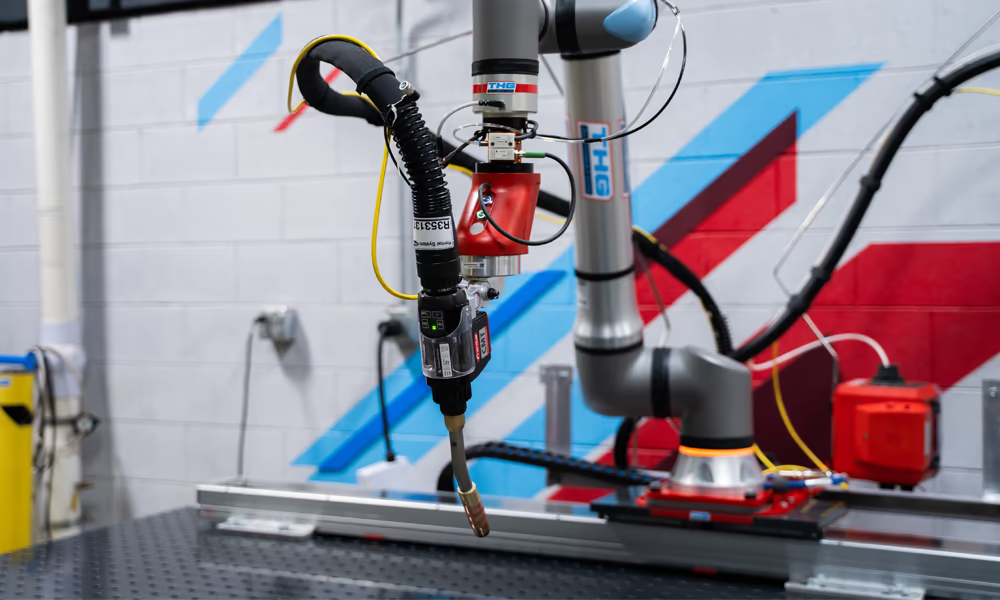
MIG Welding System
Fronius | Universal Robots
UR cobots with Fronius iWave or TPS/i and native CMT integration. For high-duty-cycle production across steel, stainless, and aluminum.
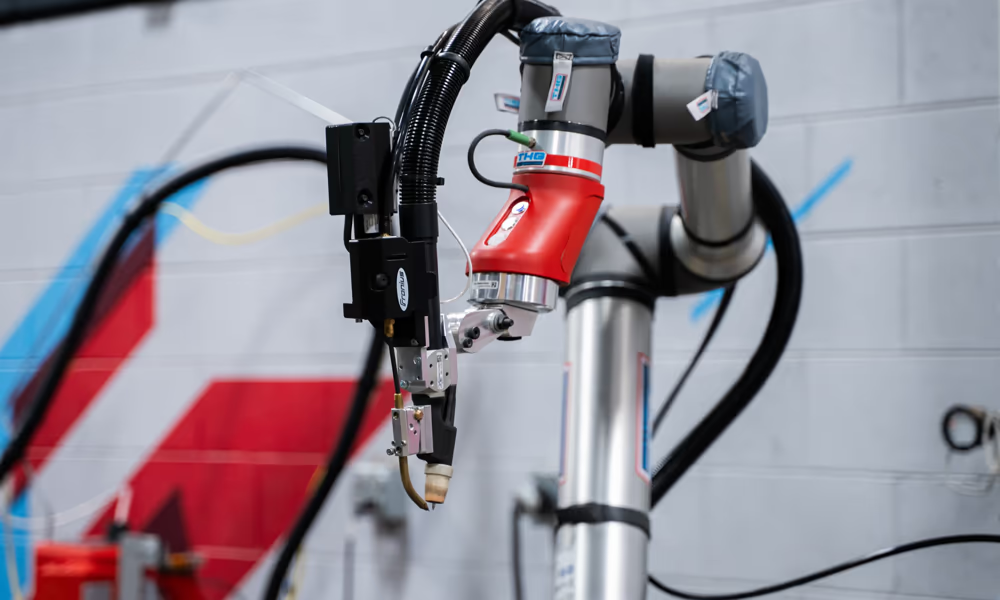
TIG Welding System
Fronius | Universal Robots
Precision GTAW for thin-gauge, high-quality requirements. Full digital process control through the Fronius iWave and THG’s interface.
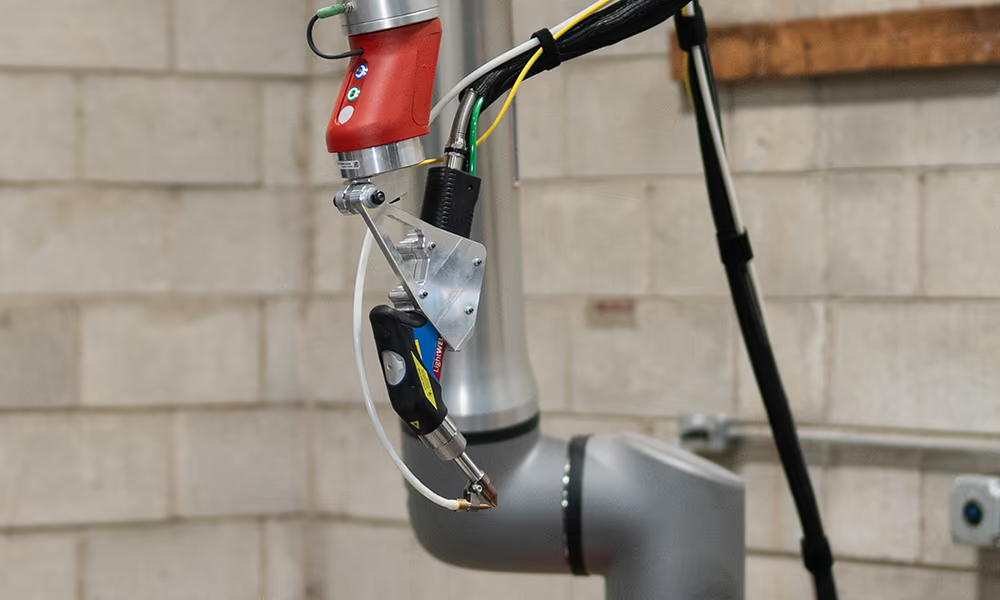
Laser Welding System
IPG Photonics | Universal Robots
IPG fiber laser sources for cosmetic, thin-gauge, or high-volume runs where weld quality and repeatability can’t be compromised.
Robotic Cutting Systems
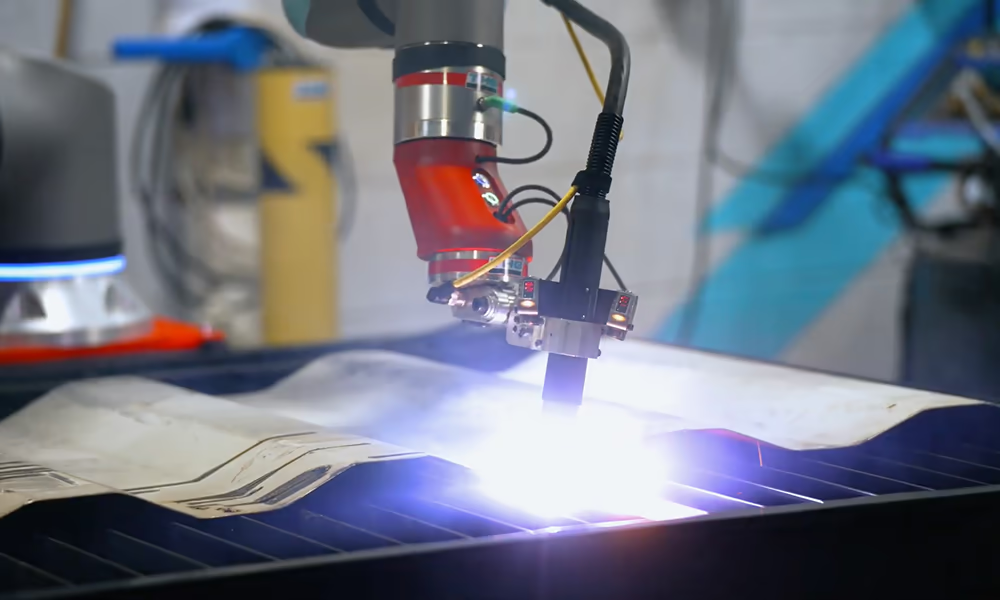
Plasma Cutting Systems
Hypertherm | Universal Robots
Hypertherm-powered cobot plasma cutting with slag detection and process monitoring. Clean cuts at production speed, shift after shift.
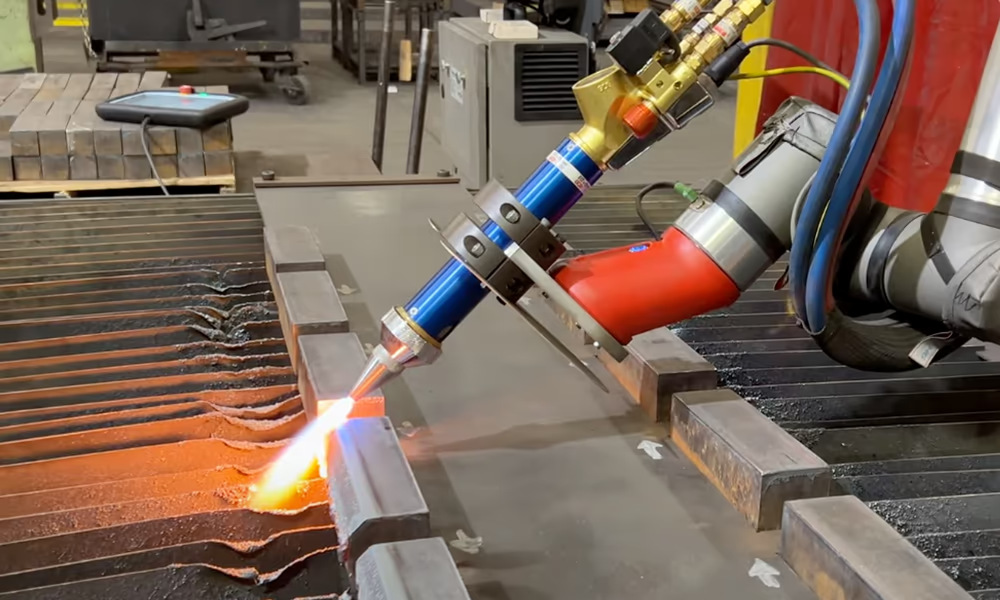
Oxy-Fuel Cutting Systems
IHT | Universal Robots
Cobot oxy-fuel cutting with Coolex® slag management, auto ignition, and flame-cutting table. Built for heavy plate and high-duty cycle torch work.
Expand Your System
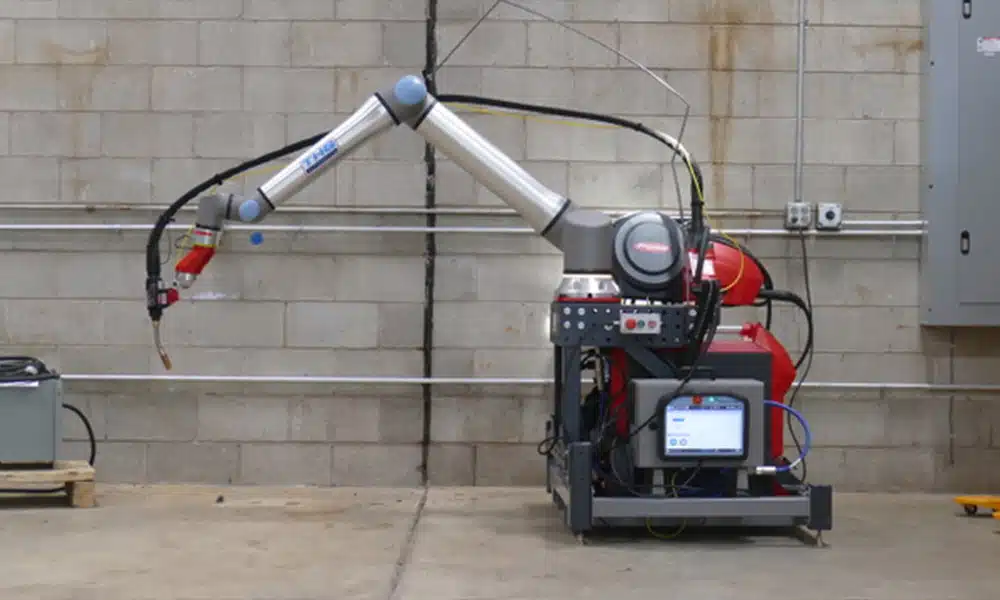
Mobile Platform
Move your cobot between workstations or cells without reprogramming.
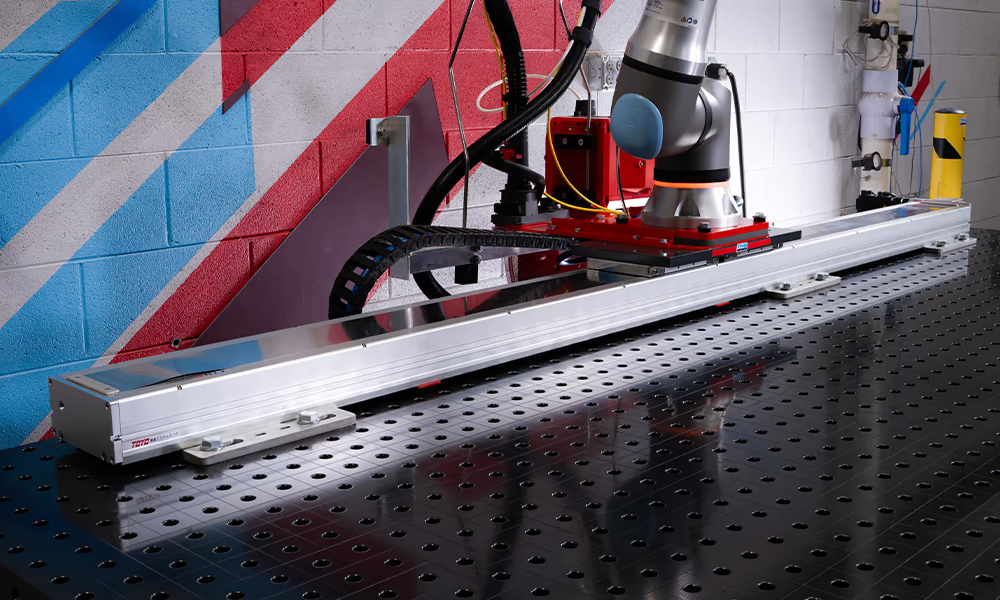
Linear Track Systems
Extend your cobot’s reach along a linear axis to handle long weldments or large part runs.
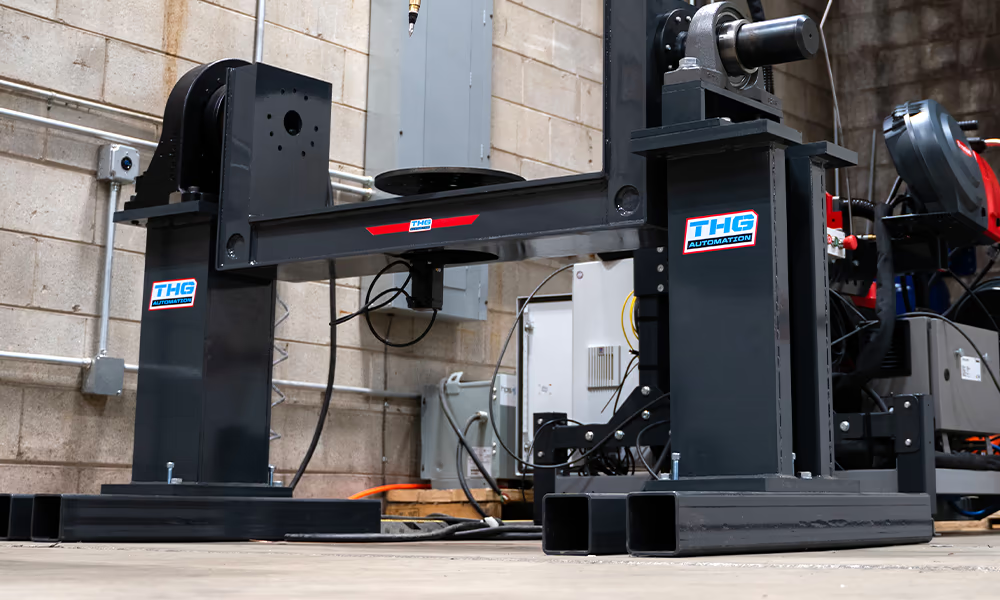
Positioners
Rotary and headstock-tailstock positioners for full part access and dual-station setups — servo-controlled through URCap.
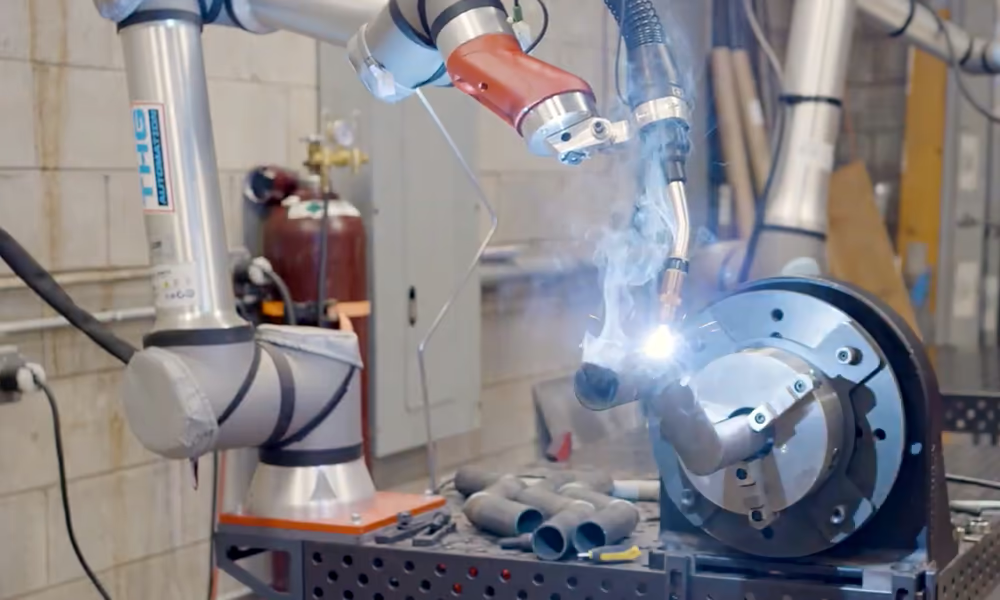
Coordinated Motion
Run the cobot and positioner in synchronized motion for continuous, uninterrupted welds on complex geometries.
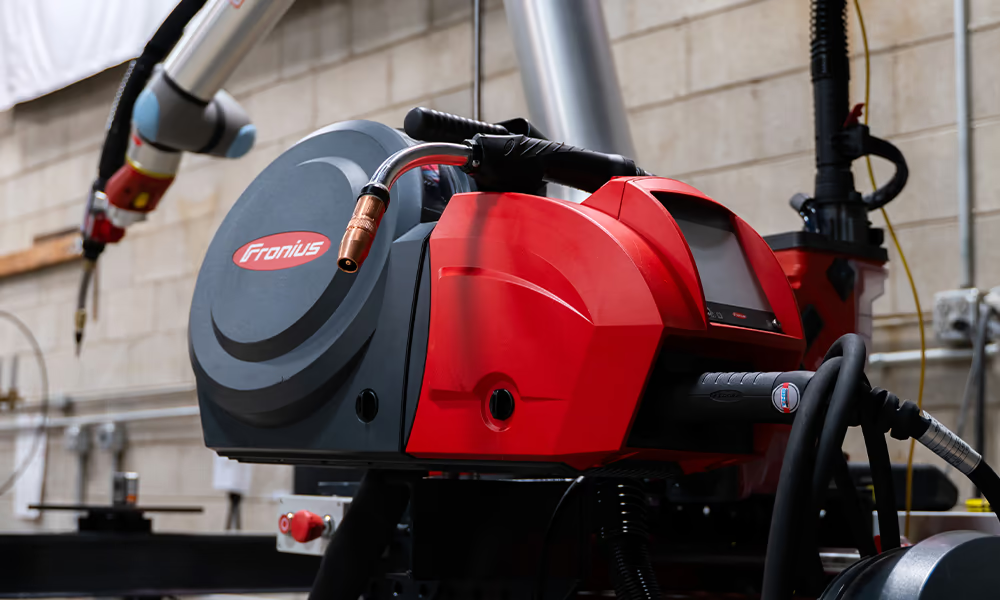
Sidecar
Go from manual to robotic welding at the flip of a switch — no cell redesign, no downtime.
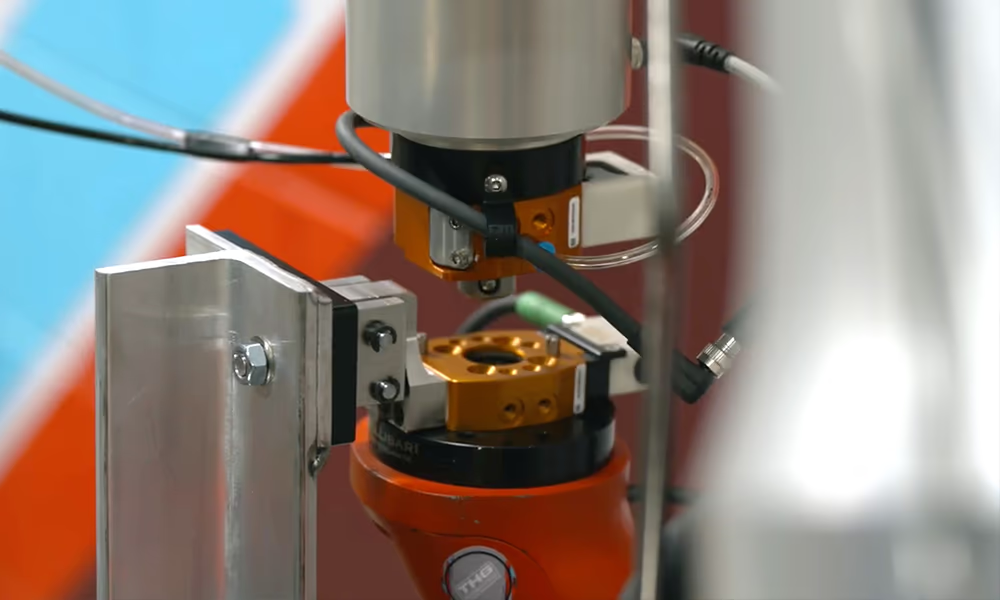
MultiMode
Switch between MIG and TIG on the same cobot using an automated tool-changer.
See it in Action
A few videos worth watching if you’re evaluating cobot welding for pipe, tube, and enclosure fabrication.
How THG Automation Cobot TIG Welding System Works
What is Coordinated Motion And How to Use it
Adding a Robotic Welding Positioner After Initial Integration
Multi-Process Cobot Welding MIG/TIG/Plasma/Laser (Auto And Manual Tool Change)
Aerospace & Defense Materials We Work With
Our Fronius-based systems are engineered for the materials aerospace and defense actually demand — not just the ones that are easy to automate.
Not sure if your material and process are automatable?
2024 Aluminum
High-strength aerospace alloy. High susceptibility to thermal cracking and porosity — requires precise heat management and waveform control.
7075 Aluminum
Airframe-grade, high-strength alloy. One of the most challenging aluminum alloys to weld — requires deep process expertise and strict parameter control.
Titanium
Flight-critical components. Extremely sensitive to contamination — requires dedicated tooling, shielding gas coverage, and clean room protocols.
Inconel / Nickel Alloys
High-temperature turbine and exhaust components. Demanding heat management and multi-pass welding capability.
Stainless Steel
Structural and fluid system assemblies. Distortion control and consistent penetration are critical across thin-gauge and heavy-wall applications.
Thin-Wall Assemblies
Where CMT and laser welding excel. Minimal heat input, zero distortion, and repeatable quality on the materials aerospace uses most.
Why Aerospace Fabricators Choose THG Automation
Aerospace welding is one of the most demanding fabrication environments in manufacturing. The materials are harder, the standards are stricter, and the consequences of getting it wrong are higher.

Process Expertise Before Technology
We start with your process, your materials, and your production environment. Then we automate it.

Fronius and IPG, Fully Integrated
Full waveform control, real-time parameter adjustment, and complete process control. Not just bolted on.

Full Weld Traceability
Every weld parameter logged automatically through Fronius WeldCube. PDF and CSV export ready for AS9100 and NADCAP audits.

We Stay After Installation
When your parts evolve or your production scales, we adapt the system with you.
Welding Process Resources for Aerospace Fabricators
TIG Welding Aluminum: Settings, Gear & Technique Guide
Aerospace aluminum demands precise oxide management, AC waveform control, and tight heat input, all critical for AWS D17.1 compliance. Start here if your parts are aluminum.
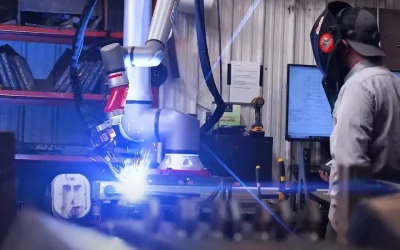
How to MIG Weld Aluminum: Challenges, Tips and Fixes
When MIG is the right choice for aluminum aerospace fabrication and how Fronius CMT changes what’s possible on thin-wall and high-volume applications.
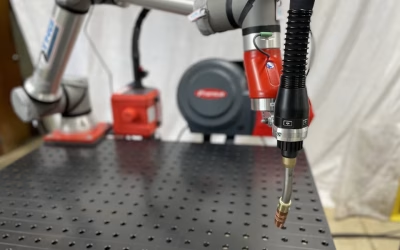
Ultimate Guide To The CMT Welding Process
How Fronius Cold Metal Transfer delivers TIG-quality results at MIG speed and why it’s becoming the process of choice for aerospace aluminum fabrication.
Have a project in mind?
Share it with our team of welding automation experts!
Aerospace Welding Automation – Common Questions
Do aerospace fabricators have to requalify welding procedures when automating?
Not necessarily. Fronius GTAW robotic systems can operate within your existing PQR parameters in many cases, particularly when process variables remain within your qualified ranges. We work through your procedure qualification records with your quality team before any system recommendation. It’s one of the first questions we ask.
Is robotic welding equipment viable for aerospace and defense contract batches of 50 to 200 parts?
Yes, and this is the most common misconception we encounter. Collaborative robots with intuitive teach programming are specifically designed for high-mix, low-volume production. Changeover between part types takes minutes. Batches of 5 to 500 parts are where our systems deliver the strongest ROI.
We tried aerospace welding automation before and it didn't work. What's different about THG?
The most common failure point is integration quality and vendor support after installation. We’ve taken over systems from other integrators that were never properly commissioned. Our approach combines deep Fronius and IPG software integration, modular architecture that adapts as your production evolves, and a genuine after-sales partnership. We don’t leave until it’s working.
Can your systems handle the exotic aluminum alloys and thin-wall parts aerospace TIG welding demands?
Yes. Fronius AC/DC waveform control manages the oxide layer challenges specific to aerospace aluminum alloys including 2024, 6061, and 7075 series. CMT technology delivers near-zero spatter and dramatically reduced heat input for thin-wall applications. Titanium, Inconel, and stainless steel are also within our system capabilities.
How quickly can we be running aerospace production after installation?
From initial consultation to system installation typically runs 8 to 16 weeks depending on system complexity and your production readiness. Operator training is included and your team can be running production within days of installation. We stay on-site until you’re confident.
Our welders are AWS D17.1 certified but have no robotics experience. Can they operate the system?
Yes. Universal Robots cobots use hand-guided teach programming. Your welder physically guides the arm to teach a weld path and controls parameters through an intuitive interface. No code, no teach pendant, no robotics engineering background required. If your welder can read a drawing, they can program the system.