
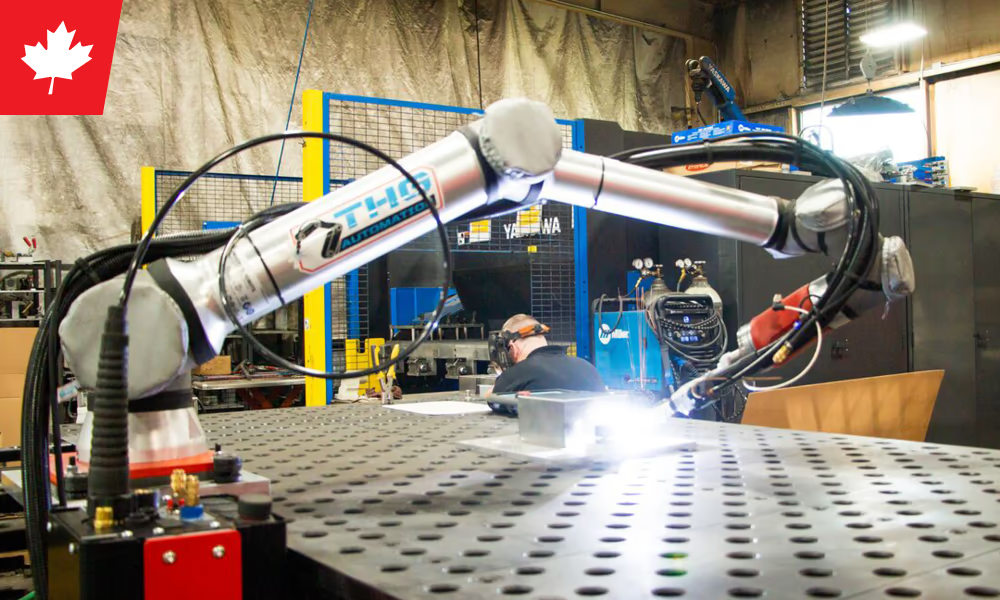
Robotic welding can help Canadian fabricators improve consistency, reduce pressure on skilled welders, and keep production moving. But when the work is tied to CWB requirements, automation has to be planned with more than production speed in mind.
A robot or cobot can support certified work, but the welding process still needs clear control. That starts with approved procedures, controlled programs, trained people, and documentation your team can stand behind.
CWB Certifies the Welding Company, Not the Robot
CSA W47.1 is the main company certification standard for fusion welding of steel in Canada. The Canadian Welding Bureau, part of CWB Group, administers the standard. Certification may be required when the project code, specs, owner, engineer, or contract calls for it.
This often comes up in work such as:
- Structural steel fabrication and erection
- Welded bridge components
- Steel building components
- Miscellaneous steel, such as stairs, railings, and platforms
- Public infrastructure or engineered steel projects
CWB certification does not mean the robot or cobot is approved on its own. The certification applies to the company’s welding capability. So, any robotic welding must stay within the procedures, personnel controls, and documentation required under CSA W47.1.
CSA describes W47.1 certification as proof that the company has the organization, personnel, welding procedures, and equipment needed to produce satisfactory welds and weldments. The company still carries that responsibility when a robot is part of the welding setup.
How CSA W47.1:25 Treats Robotic and Cobot Welding Roles
CSA W47.1:25 matters because it directly addresses robotic welding roles. The 2025 8th edition update adds definitions for robotic welding, robotic welding operator, and robotic welding programmer.
That includes both traditional industrial robots and cobots. In other words, a cobot is treated within the robotic welding category. It does not create a separate CWB path because the application uses a cobot.
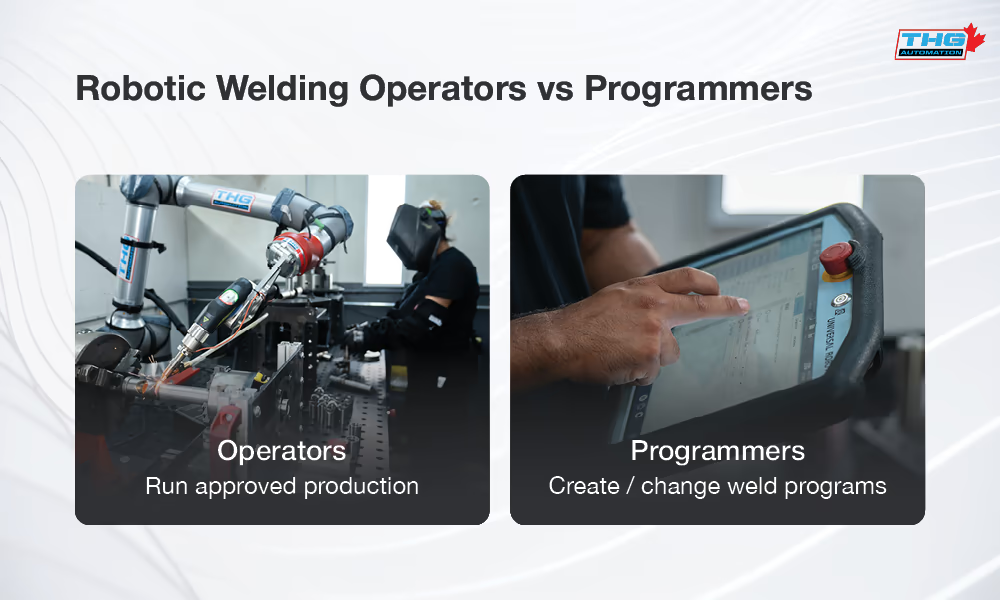
The key compliance split is simple:
- Operators run approved production.
- Programmers create or change weld programs.
That distinction matters because program changes can affect how the weld is made. If a person changes the path, speed, angle, or other settings, the company needs to know whether the weld still matches the approved WPSs and WPDSs.
The company remains responsible for controlling both roles under its CWB-certified welding operations. CWB’s W47.1:25 change summary lists new definitions for robotic welding, robotic welding operators, and robotic welding programmers. It also requires qualified robotic welding programmers for robotic applications under the scope of certification.
Operators and Programmers Have Different Compliance Requirements
A robotic welding operator and a robotic welding programmer do not carry the same compliance responsibility under W47.1:25.
A robotic welding operator runs approved production. This role may include:
- Loading and unloading parts
- Using approved fixtures
- Selecting approved jobs
- Starting the weld cycle
- Monitoring the weld
- Reporting alarms or defects
After the W47.1:25 transition, CWB does not issue a W47.1 qualification for robotic welding operators. The company still needs to decide what competence the operator needs and keep records that show the operator has been trained for the work.
A robotic welding programmer has a different role. This person writes, modifies, or materially adjusts robotic weld programs. Those changes can affect weld path, torch angle, travel speed, heat input, and other details tied to the approved welding procedure.
This is why robotic programming needs clear control. Even a small program change can affect whether production still fits the approved WPSs and WPDSs.
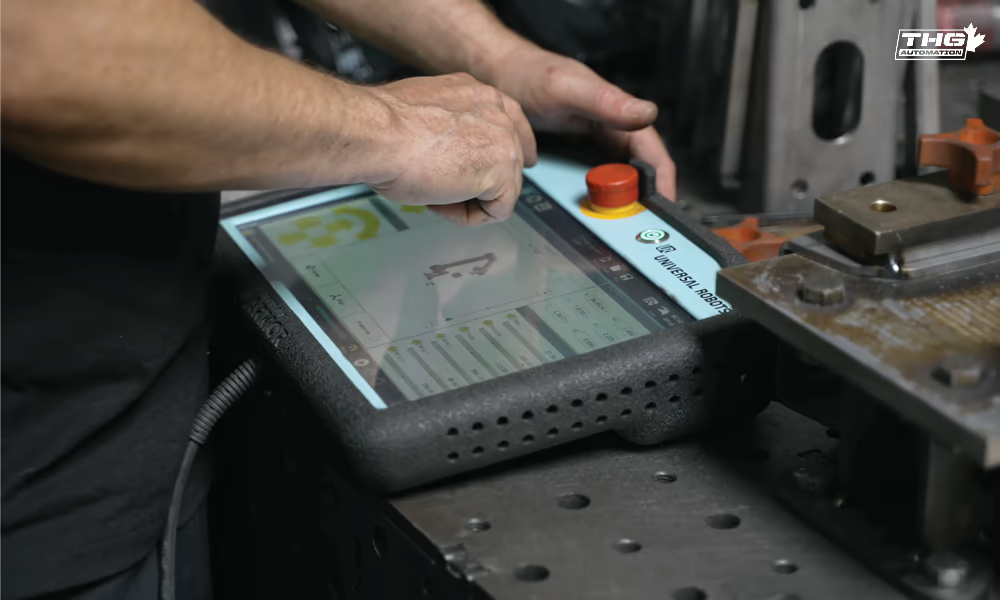
Robotic welding programmers remain a qualified role under W47.1. The standard Figure 35 test route creates a transferable FW classification that is valid for two years. Alternate tests may also be used, but those qualifications are non-transferable and remain in effect indefinitely.
There is one important exception. If a third-party company supplies the robotic weld program, no robotic welding programmer test is required for that program. However, the certified company must still demonstrate to CWB that the program was supplied by a third party and that it meets the company’s WPSs and WPDSs.
Keep Robotic Weld Programs Within Your Approved WPS and WPDS
A robotic weld program does more than move the arm from one point to another. It controls how the weld is produced from part to part.
That is why program control matters under CWB-certified work. If a program change moves production outside the approved WPS (welding procedure specification) or WPDS (welding procedure data sheet), the company may no longer have the same control over how the weld is made.
Companies should keep clear records that connect robotic programs back to approved welding procedures. Useful records may include:
- Approved WPS and WPDS references
- Program revision history
- Programmer qualification records, when applicable
- Third-party program records, when applicable
- Change-control records
- First-off inspection steps
Operator-side records can also support audit readiness. These may include:
- Training records
- SOP acknowledgments
- Job setup instructions
- Escalation rules
- Production authorization
These records should not be treated as a separate CWB checklist unless the standard or CWB directly requires them. They are practical ways to show that the welding process stays controlled after automation enters production.
Robot Safety Is Managed Separately From CWB Welding Compliance
CWB welding compliance and robot safety both matter, but they are handled through different requirements. CSA W47.1 is not a robot safety standard, and it does not replace safety planning for the robot cell.
Manufacturers still need to look at safety requirements for the full welding application, including:
- CSA Z434
- CSA W117.2
- ISO 10218-2:2025
- Provincial OH&S requirements
- Guarding
- Ventilation
- Lockout
- Risk assessment
- Verification and validation
This is especially important for collaborative applications. A cobot is not automatically guard-free. The full setup still needs proper risk assessment and safety design before it goes into production.
Build Robotic Welding Around CWB Control From the Start
Robotic and cobot welding can work within CWB-controlled production when your company keeps the welding process under control. The robot is only one part of that process.
Your automation plan should fit how your shop trains people, follows procedures, controls programs, and keeps records. It should also support your workflow, documentation needs, and long-term production goals before the system reaches the floor.
THG Automation in Canada locally builds and supports robotic welding systems in Ontario, Quebec, Manitoba, Saskatchewan, Alberta, and British Columbia. Our team can review your parts, procedures, workflow, and compliance needs before you choose a system. That helps you plan welding automation around the way your shop actually works.
Talk to our fabrication experts about a robotic welding system built to fit your CWB-controlled workflow, from process planning to training and long-term support.