


Aerospace manufacturers are under pressure to get more from the same floor space, equipment, and skilled people. Demand is rising, margins are tight, and quality expectations keep getting stricter. At the same time, part mixes change often, and experienced labour is harder to scale.
So, what’s the solution to tick all the boxes?
For small and mid-sized aerospace shops, automation has to be practical. It should reduce the work that slows production, creates rework, or depends too heavily on scarce skills. The best place to start is the constraint that limits capacity, quality, or repeatability.
What’s included in the article:
- Start With the Constraint, Not the Robot
- Automate the Work That Drains Capacity
- Build Flexibility Into High-Mix Production
- Let Quality Requirements Set the Automation Path
- Match the System to the Process
- Welding and Cutting Are a Practical Starting Point
- The Future Belongs to Shops That Can Adapt
Start With the Constraint, Not the Robot
The first question should be: “What is limiting production?” In aerospace manufacturing, automation works best when it solves a clear problem on the shop floor.
Aerospace suppliers often face tight delivery timelines, strong cost pressure, and high customer expectations. At the same time, skilled labour and process consistency are harder to scale as part volumes and program demands change.
A useful automation target is usually easy to name. It may be a task that slows output, creates rework, depends too much on one experienced person, or puts strain on operators. It may also be a process where small manual differences lead to inconsistent results.
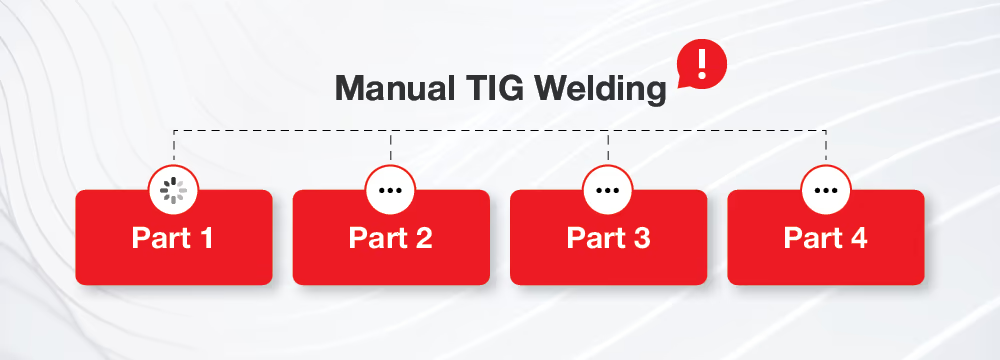
However, this doesn’t necessarily mean you should think in terms of narrow specifics. Sometimes, the “specific” is about higher level operations. For example, manual TIG welding in general could be slowing you down, not necessarily a specific part being TIG welded. You might want to automate the entire process instead of looking at automating one part.
Before choosing a system, shops should ask:
- What work is limiting capacity?
- Where does rework usually start?
- Which tasks are hard to staff?
- Which process needs more repeatability?
- Can the current workflow support automation?
If the process is not repeatable or valuable enough, automation may not be the first fix. The shop may need better workflow, clearer procedures, or improved part presentation before adding a robot.
Automate the Work That Drains Capacity
The best automation targets are the tasks that free capacity without affecting quality, process precision, and control. In aerospace manufacturing, that can include more than welding or cutting.
Common automation targets include:
- Handling, loading, and part movement
- Assembly support
- Drilling and fastening
- Deburring, grinding, and polishing
- Inspection and QC support
- Welding and cutting
The practical value depends on the task. Automation can reduce waste, improve repeatability, and help operators handle work that is tiring or hard to staff. It can also support inspection by making steps more consistent before parts move downstream.
This does not mean every manual task should be automated. Some work needs human judgment, quick adjustment, or low setup time. A good starting point is a task that happens often enough, follows a clear process, and limits the shop when it stays fully manual.
For small and mid-sized aerospace manufacturers, the goal is to free skilled people for higher-value work. That may mean moving repeatable handling, finishing, inspection support, welding, or cutting into a controlled automation system.
Build Flexibility Into High-Mix Production
High-mix aerospace work needs automation that can adapt as parts, programs, and requirements change. Many small and mid-sized shops are not running the same part all day. They may handle lower volumes, short runs, changing customer specs, and limited floor space. You need manual operators for such work because of human flexibility. Therefore, you also need flexible automation that can mimic human adaptability under operator control to automate such tasks.
A rigid automation system may work well for one part, then become difficult to use when the next program needs a different setup, process, or part orientation. In high-mix production, flexibility has to be part of the system from the start.
This is one reason NIST describes high-mix, low-volume manufacturers as a strong fit for flexible robot adoption. Such shops often need systems that can be reconfigured without major disruption.
For aerospace welding and fabrication, this principle matters when part access or process needs change. A modular system can start with one application, then grow with the work. Depending on the application, that could include added motion, positioners, tracks, rotary tables, or coordinated motion. THG uses this type of modular approach so shops can build around current production needs while keeping room for future aerospace welding and cutting applications.
Let Quality Requirements Set the Automation Path
Aerospace automation has to follow the quality requirements of the work. If a manual process becomes automated, the shop still has to meet the same customer specs, inspection steps, traceability needs, and documentation rules.
That means quality should shape the automation plan early. Before choosing a system, shops should confirm:
- Which specs or customer requirements apply
- How programs will be controlled
- Where inspection points are needed
- What data or records must be kept
- Who can adjust settings
- Whether a process change needs requalification or customer approval
This matters when the process is already approved. For example, if a part is qualified for TIG, switching it to MIG may create extra approval work. In that case, automated TIG may be the better path because the shop can keep the required welding process instead of changing the work to fit the robot.
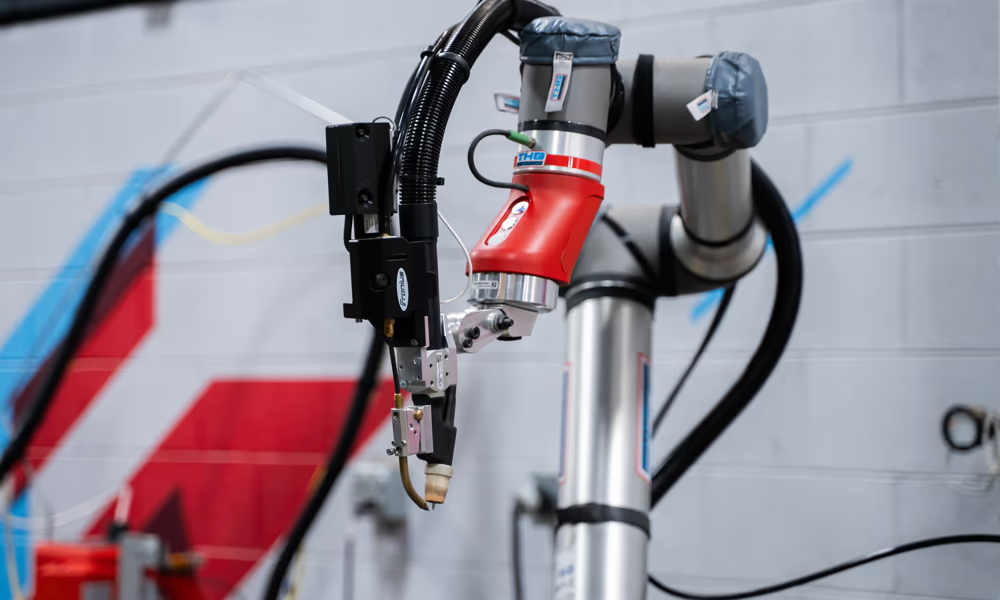
This is one area where THG’s expertise can help. THG offers automated collaborative robotic TIG welding solutions that support the process many aerospace shops already use. The goal is not to force customers away from TIG. It is to help regular welders use automation in a controlled way. THG supports that with process guidance, validation, training, and welding expertise.
We specialize in advanced robotic welding solutions for the aerospace and defense sector. Our GTAW, CMT, GMAW, and laser welding systems are built for AWS D17.1 environments and exotic materials. Our systems are actively used by Lockheed Martin, Blue Origin, Collins Aerospace, Aero Fluid Products, and others.
Match the System to the Process
The right automation system is the one that fits the task, workflow, quality requirements, and future applications. The robot arm matters, but it is only one part of the decision.
Before choosing a system, shops should look at the full application:
- Reach and payload
- Tooling and part access
- Sensing needs
- Programming method
- Safety requirements
- Documentation needs
- Operator skill level
- Local support
- Expansion options
These details often decide whether automation works in production. A robot may have enough reach on paper, but the real job may need a positioner, better tooling, a fixture change, or added sensing. A system may also be easy to demo but harder to support if operators cannot program, adjust, or maintain it with confidence.
A simple system may be the right choice for a simple, repeatable task. Advanced features only matter when the process needs them. The goal is to match the system to the work, not add complexity for its own sake.
Welding and Cutting Are a Practical Starting Point
Welding and cutting are not always the first automation target. But they can be strong candidates when the process is repeatable, controlled, and tied to a clear production constraint.
For aerospace fabricators, that may include:
- Repeatable welds
- Stable cutting geometry
- Manual variation that causes rework
- Reach, safety, or access limits
- Jobs that need manual-to-automated flexibility
This is where modular system design matters. A shop may not need a large fixed cell for every application. It may need a welding or cutting system that can start with one job, then grow as parts, materials, and production needs change.
THG’s welding and cutting systems can be configured around the process and application. Relevant options include:
- MIG and TIG welding systems
- Laser welding where appropriate
- Plasma cutting
- MultiMode for combining welding and/or cutting processes in one robotic cell
- SideCar for manual-to-automated flexibility
- Positioners and tracks
- Coordinated motion moves the robot and positioner together during the weld path. This helps improve part access, torch angles, and weld quality on round, large, or complex parts.
For small and mid-sized aerospace manufacturers, this gives welding and cutting a practical place to start. The shop can focus on one controlled application, validate the process, train the team, and expand the system when the next application makes sense.
The Future Belongs to Shops That Can Adapt
The future of aerospace automation will not be won by the biggest system on the floor. It will be shaped by shops that can adjust faster when parts, processes, and customer requirements change.
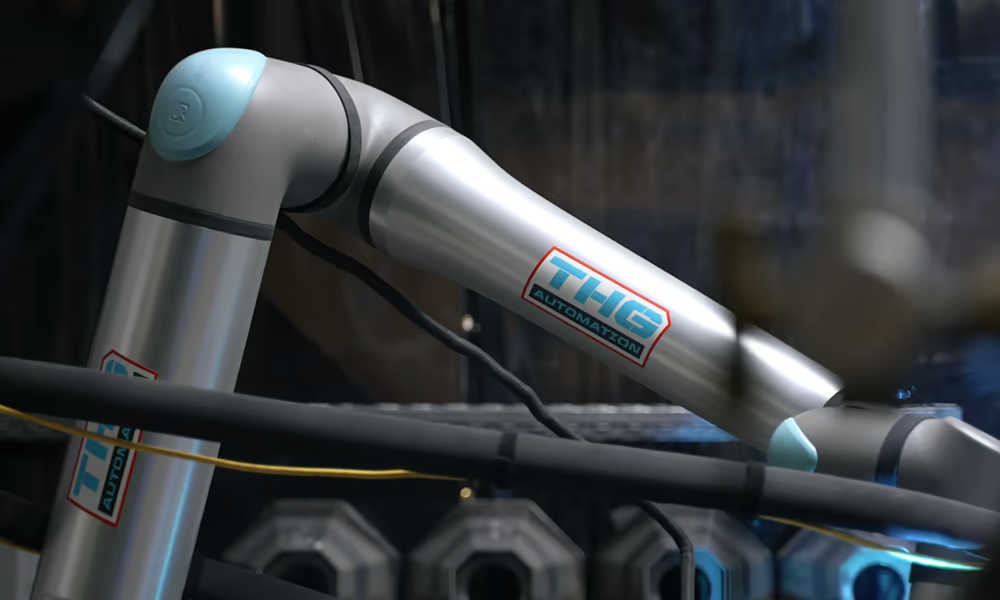
For small and mid-sized manufacturers, that means choosing automation that can grow with the work. AI, robotics, inspection data, and connected systems will all play a larger role, but they still need a practical foundation. The system has to support the shop’s people, processes, quality requirements, and production goals.
That is where flexible automation creates long-term value. A shop can start with one clear application, prove the process, train the team, and expand when the next opportunity makes sense.
If your shop is looking at aerospace automation, talk to our automation experts. We can help review your parts, processes, and production constraints, then build a modular system around the work you need to improve.