
Data Center Fabrication Challenges Standard Automation Can’t Solve
Data center construction is booming. But qualified pipe and TIG welders aren’t showing up to match it. Every challenge below comes back to the same problem — you can’t build your business around people you can’t hire.
Your best welders are your ceiling. When a big contract comes in, your output is limited by how many qualified welders you have. You can’t ship more than your team can weld.
Quality varies when you’re short-staffed. When you’re running with whoever you could hire, results change shift to shift. Your QC catches it — but fixing it still costs you time and money.
The work is there. The welders aren’t. The shops winning data center contracts aren’t hiring their way to capacity. They’re automating the repetitive runs so the welders they have can do more.
THG Automation Welding Systems
for Data Center Fabrication
Robotic Welding Systems
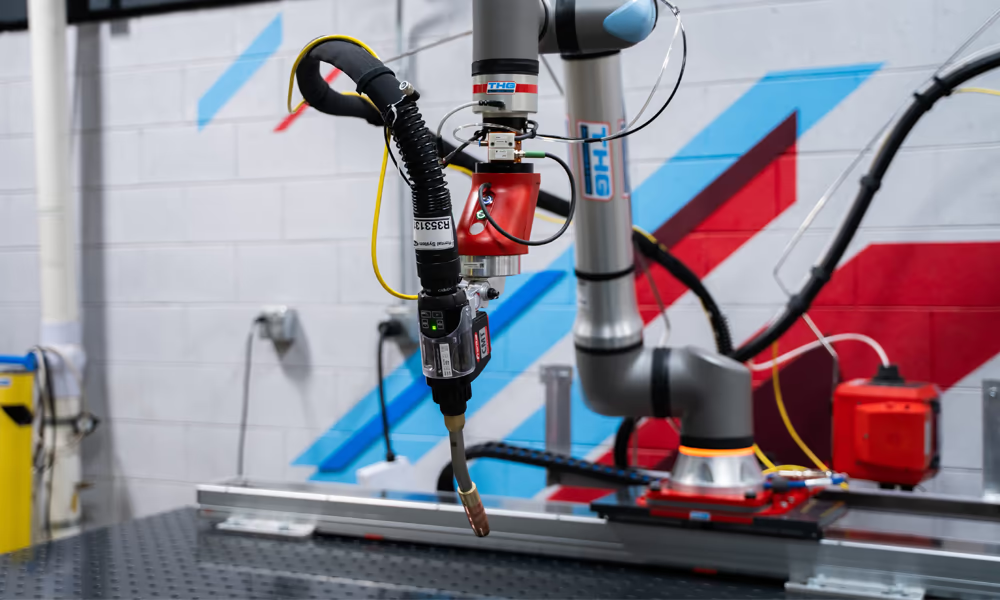
MIG Welding System
Fronius | Universal Robots
UR cobots with Fronius iWave or TPS/i and native CMT integration. For high-duty-cycle production across steel, stainless, and aluminum.
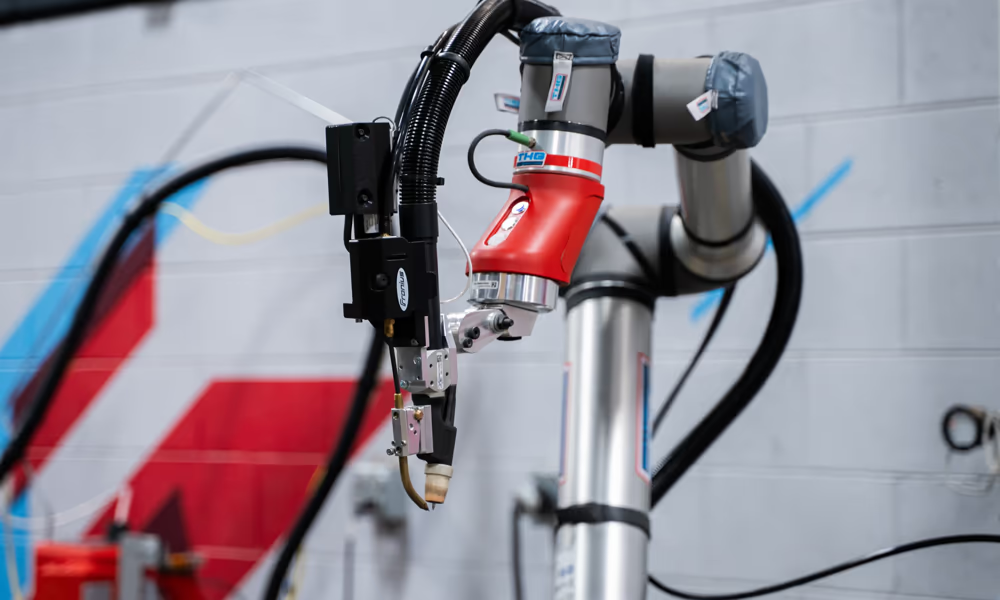
TIG Welding System
Fronius | Universal Robots
Precision GTAW for thin-gauge, high-quality requirements. Full digital process control through the Fronius iWave and THG’s interface.
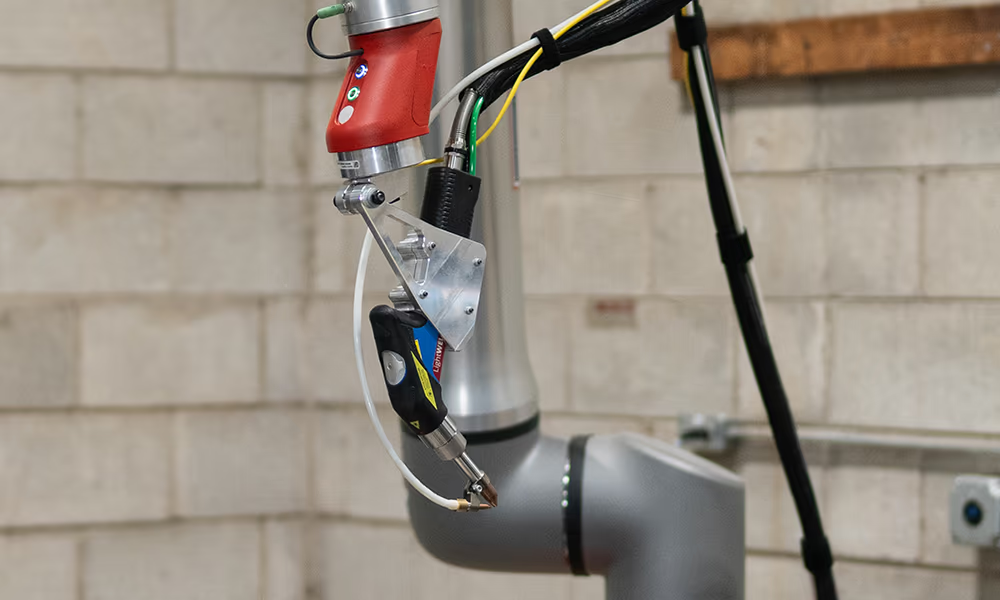
Laser Welding System
IPG Photonics | Universal Robots
IPG fiber laser sources for cosmetic, thin-gauge, or high-volume runs where weld quality and repeatability can’t be compromised.
Robotic Cutting Systems
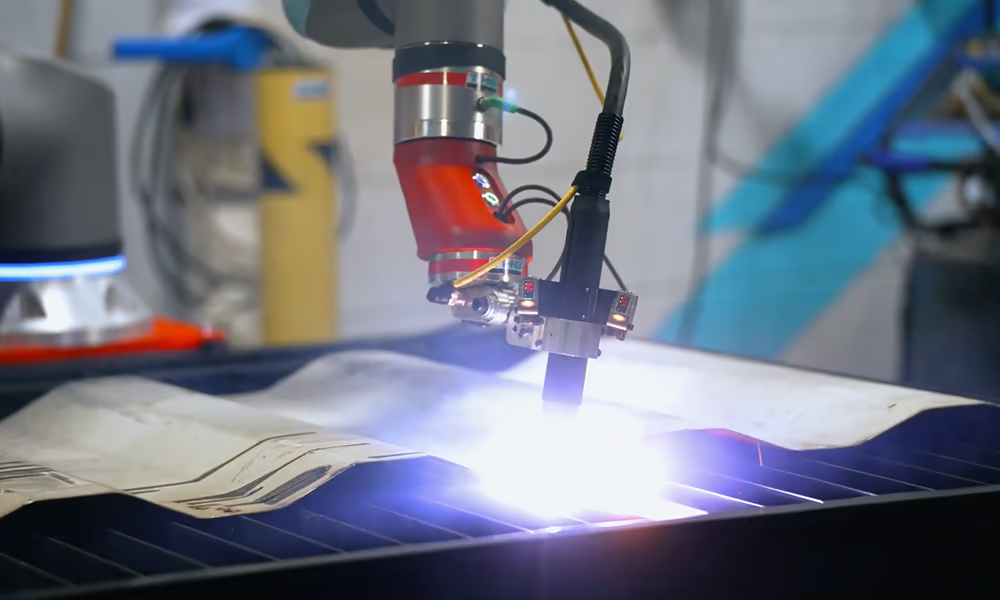
Plasma Cutting Systems
Hypertherm | Universal Robots
Hypertherm-powered cobot plasma cutting with slag detection and process monitoring. Clean cuts at production speed, shift after shift.
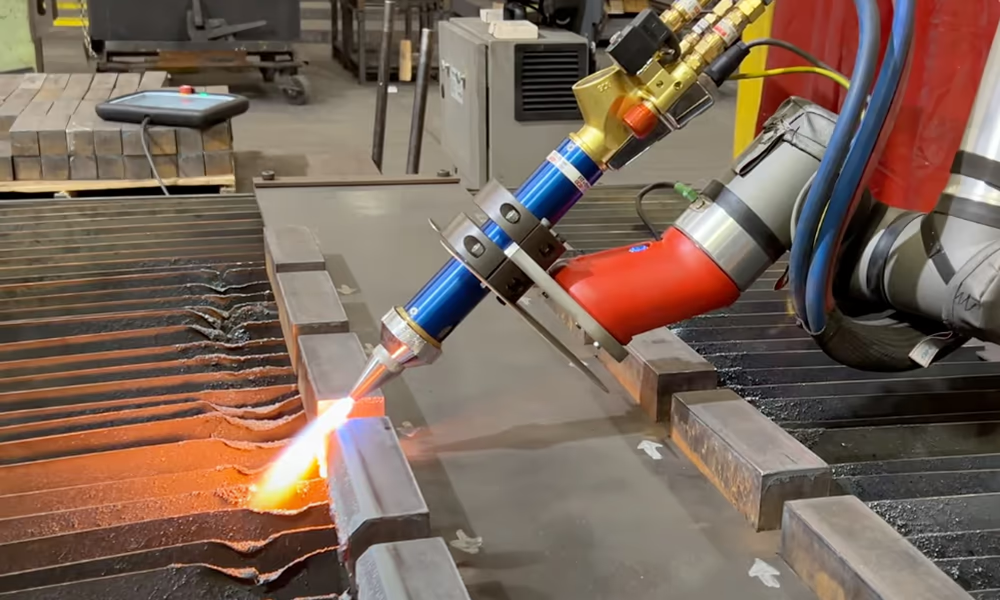
Oxy-Fuel Cutting Systems
IHT | Universal Robots
Cobot oxy-fuel cutting with Coolex® slag management, auto ignition, and flame-cutting table. Built for heavy plate and high-duty cycle torch work.
Expand Your System
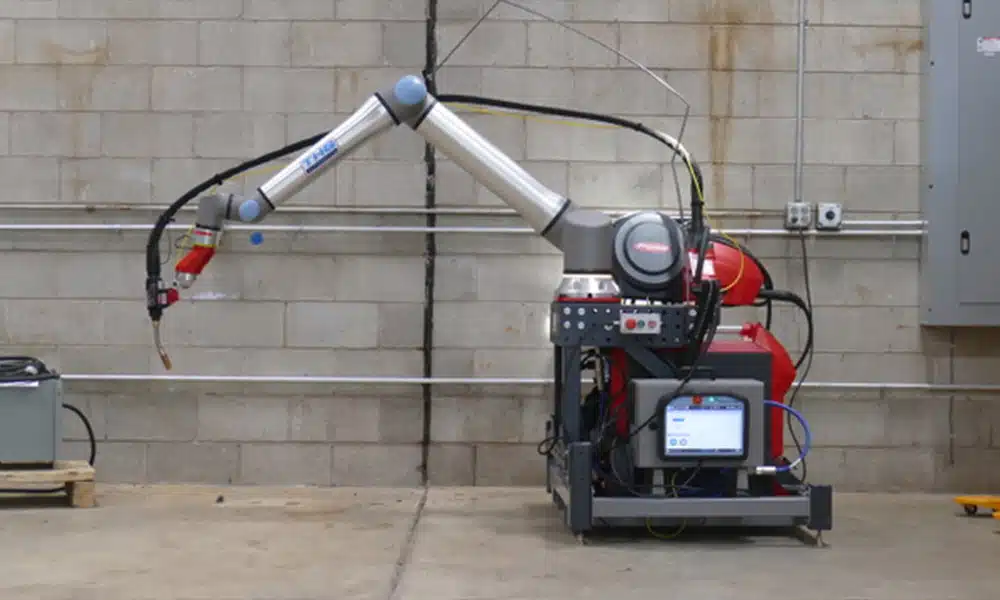
Mobile Platform
Move your cobot between workstations or cells without reprogramming.
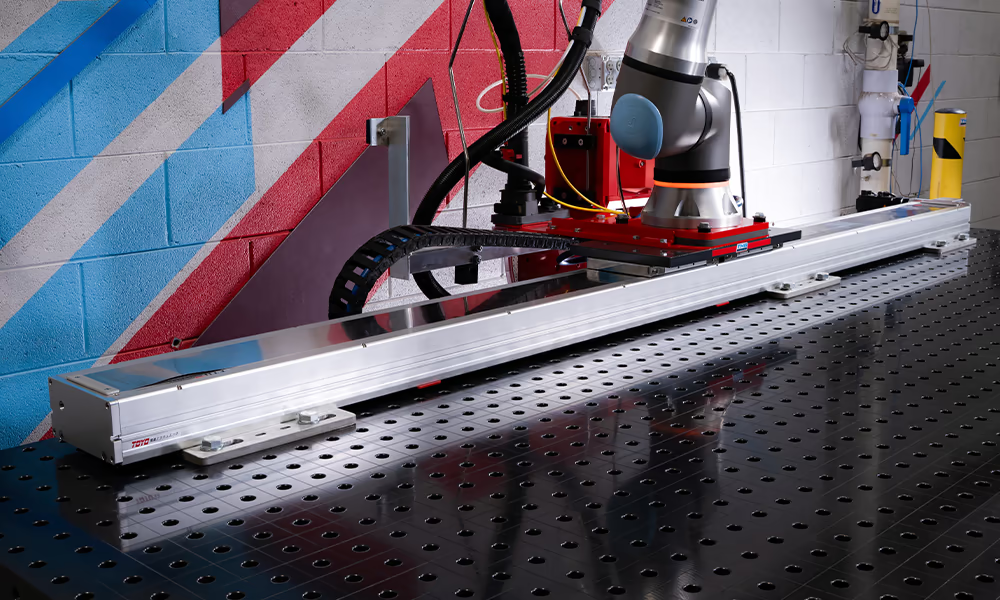
Linear Track Systems
Extend your cobot’s reach along a linear axis to handle long weldments or large part runs.
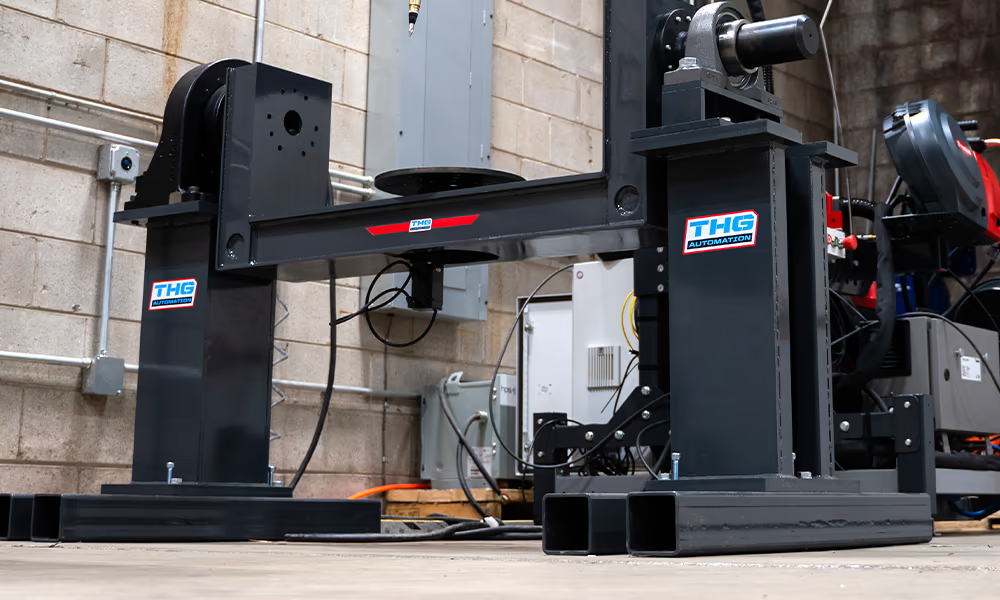
Positioners
Rotary and headstock-tailstock positioners for full part access and dual-station setups — servo-controlled through URCap.
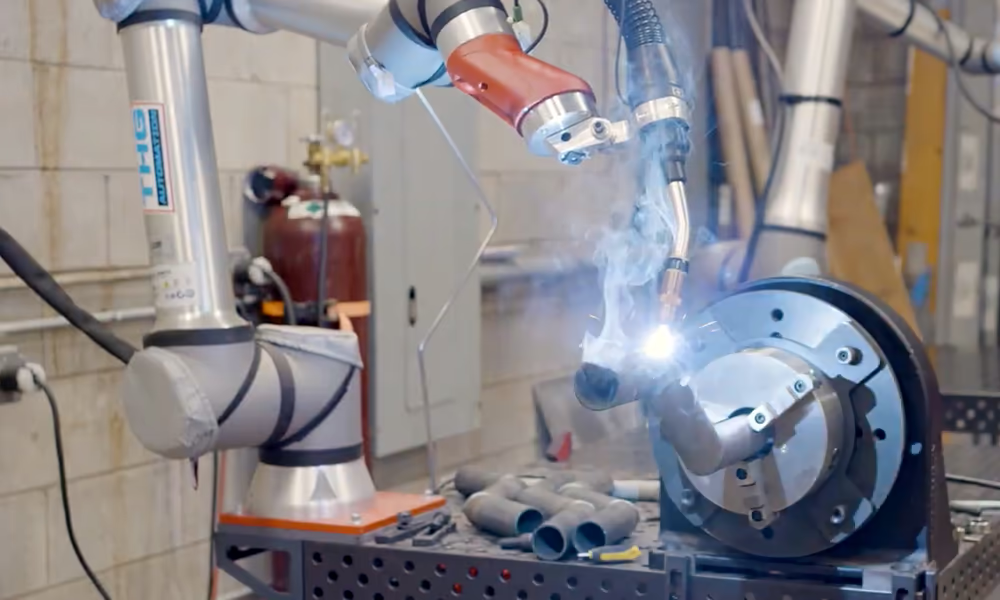
Coordinated Motion
Run the cobot and positioner in synchronized motion for continuous, uninterrupted welds on complex geometries.
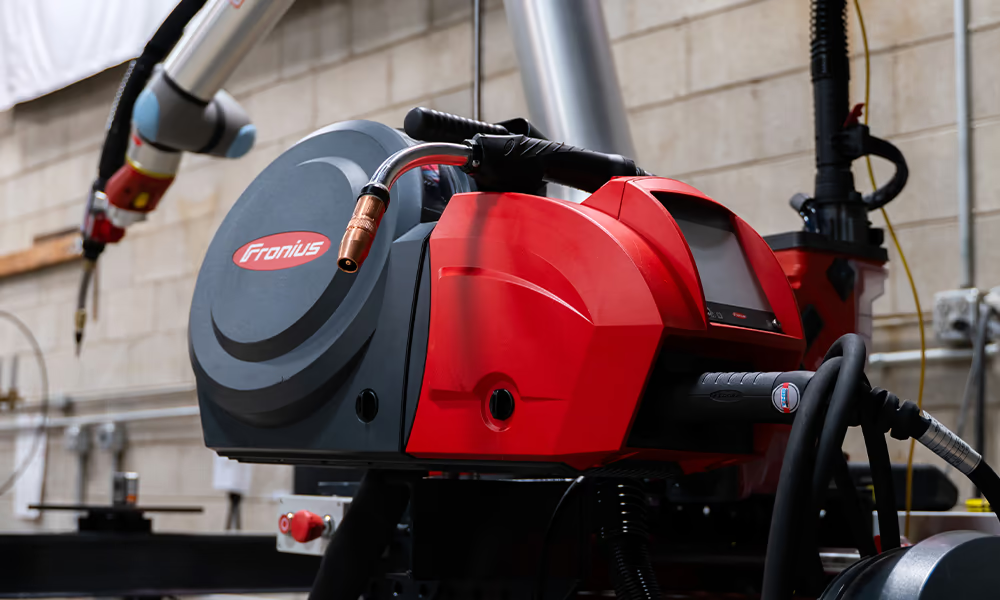
Sidecar
Go from manual to robotic welding at the flip of a switch — no cell redesign, no downtime.
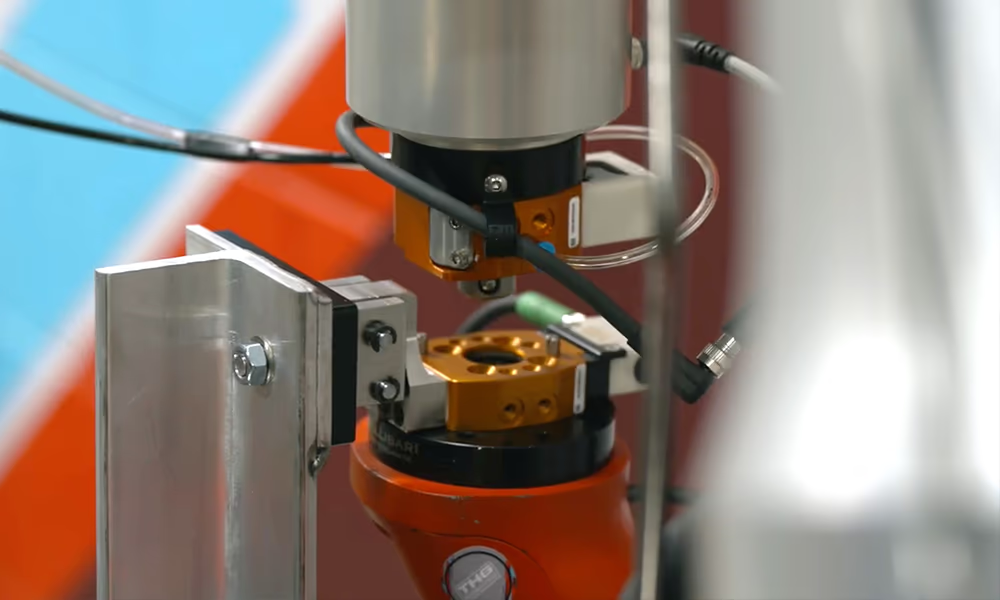
MultiMode
Switch between MIG and TIG on the same cobot using an automated tool-changer.
See it in Action
A few videos worth watching if you’re evaluating cobot welding for pipe, tube, and enclosure fabrication.
How THG Automation Cobot TIG Welding System Works
How THG Automation Laser Welding Cobot System Works
What is Coordinated Motion And How to Use it
Multi-Process Cobot Welding MIG/TIG/Plasma/Laser (Auto And Manual Tool Change)
Pipe & Tube Welding Capabilities
Data Center Welding Applications We Automate
Our TIG, CMT, and laser systems are built for the repetitive, precision-demanding fabrication work data center mechanical contractors and fab shops run every day.
Not sure if your application fits?
Cooling Tower & Heat Exchanger Assemblies
Tube-to-tubesheet, header, and manifold welding on stainless and copper-nickel. CMT delivers near-zero spatter and tight heat control on thin-wall components that can’t be distorted.
Enclosure & Panel Fabrication
Laser welding on thin-gauge stainless and aluminum enclosures. Zero distortion, cosmetically clean welds on UPS cabinets, distribution panels, and precision housings.
Thermal Management Components
CMT on aluminum cold plates, heat sinks, and manifolds for liquid cooling systems. The minimal heat input of CMT is purpose-built for aluminum components where distortion kills part tolerances.
Chilled Water Pipe Runs
Repetitive GTAW on carbon and stainless pipe sections. Consistent root passes, fill, and cap — shift after shift — without relying on your best welder for every joint.
Pipe Spool Fabrication
Cobot TIG with positioner-synchronized rotation for pipe spool joints. Consistent weld parameters, no weld position variation, no manual repositioning between passes.
Structural Steel & Rack Assemblies
MIG welding on server rack frames, cable tray supports, and raised floor systems. High-duty-cycle production with consistent penetration and no operator fatigue.
Why Data Center Fabricators Choose THG Automation
Data center construction runs on tight schedules and zero tolerance for rework. THG systems are built to keep pace with the volume, the consistency requirements, and the mix of applications mechanical contractors and fab shops actually face.

Repetitive Runs,
Consistent Results
Pipe joints, tube assemblies, and spool sections are exactly what cobot TIG excels at. Program once, run all day — same parameters, same penetration, every time.

Positioner-Synchronized
Pipe Welding
Servo-controlled positioners rotate the pipe while the cobot tracks the joint. No weld position variation. No repositioning between passes. One continuous, certified weld.

CMT for Aluminum
Cooling Components
Fronius CMT delivers near-zero spatter and minimal heat input on aluminum manifolds, cold plates, and heat exchangers — where distortion is a defect, not an inconvenience.

Scale Output Without
Adding Headcount
One operator running a THG system can match the output of multiple manual welders on repetitive applications. When your backlog grows, you add shifts — not headcount.
Welding Process Resources for Data Center Fabricators
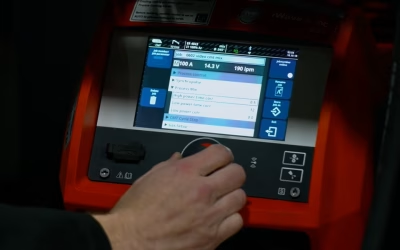
MIG Welding Settings And Charts For Perfect Weld Quality
For shops running structural steel, rack frames, and supports alongside pipe work. Covers voltage, wire feed speed, and pulsed MIG — the settings side of production welding explained clearly.
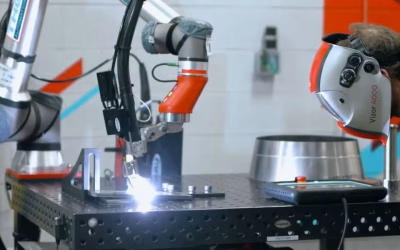
How To TIG Weld Stainless Steel With Less Effort And Higher Quality
Stainless pipe and tube runs are the backbone of most chilled water systems. This guide covers heat management, settings, and technique — useful reading before you evaluate how to automate those runs.
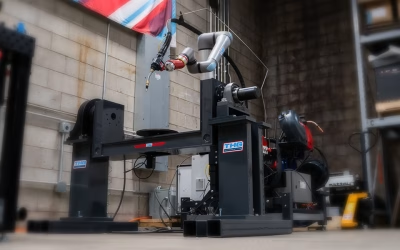
Robot Welding Cells Explained: Setup, Use Cases, and Benefits
Not sure what a cobot welding cell actually looks like in a fabrication environment? This covers setup, use cases, and what to expect — a good starting point if you’re early in evaluating automation.
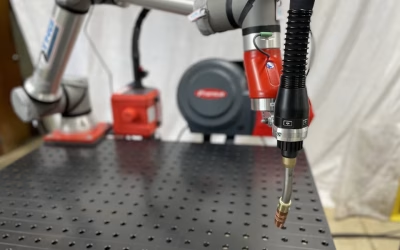
Ultimate Guide To The CMT Welding Process
How Fronius Cold Metal Transfer delivers TIG-quality results at MIG speed and why it’s becoming the process of choice for aerospace aluminum fabrication.
Have a project in mind?
Share it with our team of welding automation experts!
Data Center Welding Automation – Common Questions
Hidden
Can your systems handle the pipe and tube diameters used in chilled water and cooling systems?
Yes. TIG systems paired with our servo-controlled positioners handle a wide range of pipe diameters and wall thicknesses. The positioner rotates the workpiece in synchronized motion with the cobot, eliminating weld position variation across the full joint. We size the positioner and fixturing around your specific pipe schedule during the application review.
Is robotic TIG welding viable for the mix of part types a mechanical fab shop runs?
Yes — and this is where cobots have a specific advantage over traditional robotic systems. Changeover between part types takes minutes, not hours. Shops running ten different spool configurations in a day can program each as a separate job and switch on the fly. High-mix production is where our systems deliver some of the strongest ROI.
What welding codes apply to data center piping, and can your systems meet them?
Chilled water and cooling piping in commercial data centers typically falls under ASME B31.9 or B31.1 depending on system pressure. Our GTAW systems operate within qualified PQR parameters, and we work through your procedure documentation during system configuration. If your shop is already qualified on a process, we configure the system to stay within those parameters.
Hidden
We fabricate both pipe spools and structural steel in the same shop. Can one system handle both?
In many cases, yes. Our modular platform supports multiple process configurations — TIG for pipe, MIG for structural steel — and the Sidecar add-on lets your operators switch between manual and robotic welding at the same station without redesigning the cell. We’ll walk through your application mix in the initial consultation to recommend the right configuration.
How quickly can a data center fab shop be running production after installation?
From consultation to installation typically runs 8 to 16 weeks depending on system complexity. Operator training is included, and most shops are running production within days of installation. Your welders teach the system using hand-guided programming — no code, no robotics background required.
Our shop runs pipe fabrication on a project basis. Does the ROI still work for us?
It depends on your project volume and cycle frequency. Shops running repetitive pipe spool configurations across multiple projects — where the same joint geometry repeats across jobs — see strong ROI even at moderate volume. If you’re running truly one-off, custom-spec pipe on every project, we’ll tell you honestly whether automation makes sense for your application before you invest.