

Collaborative Robotic Laser Welding for High-Precision Manufacturing
Traditional robotics capability. Collaborative simplicity.
THG puts high-speed fiber laser welding in your team’s hands with a production-ready system that increases throughput, reduces heat input, and delivers repeatable weld quality. Powered by IPG laser technology and configured around your application, with no robotics experience required.
Reliable and powerful IPG LightWeld power sources
Multi-axis laser welding with coordinated motion
Extreme precision, welding speed, and heat control
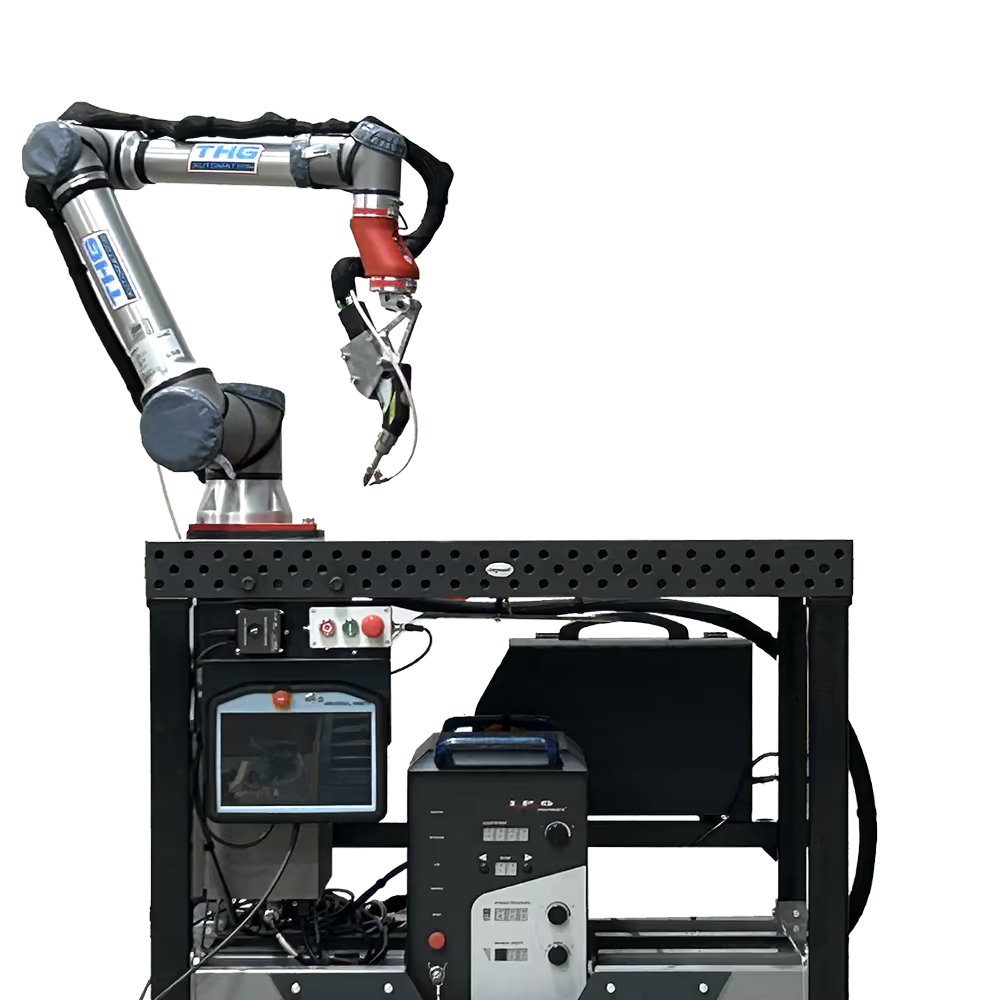
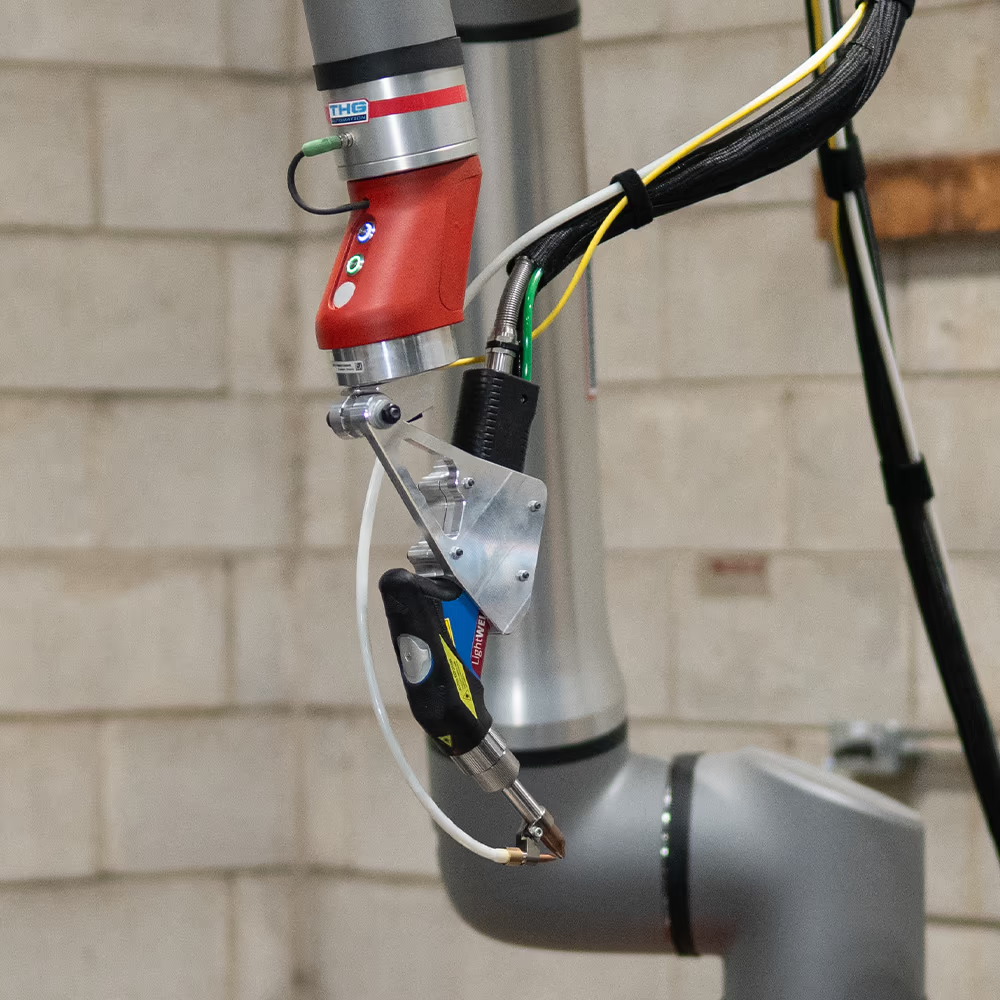
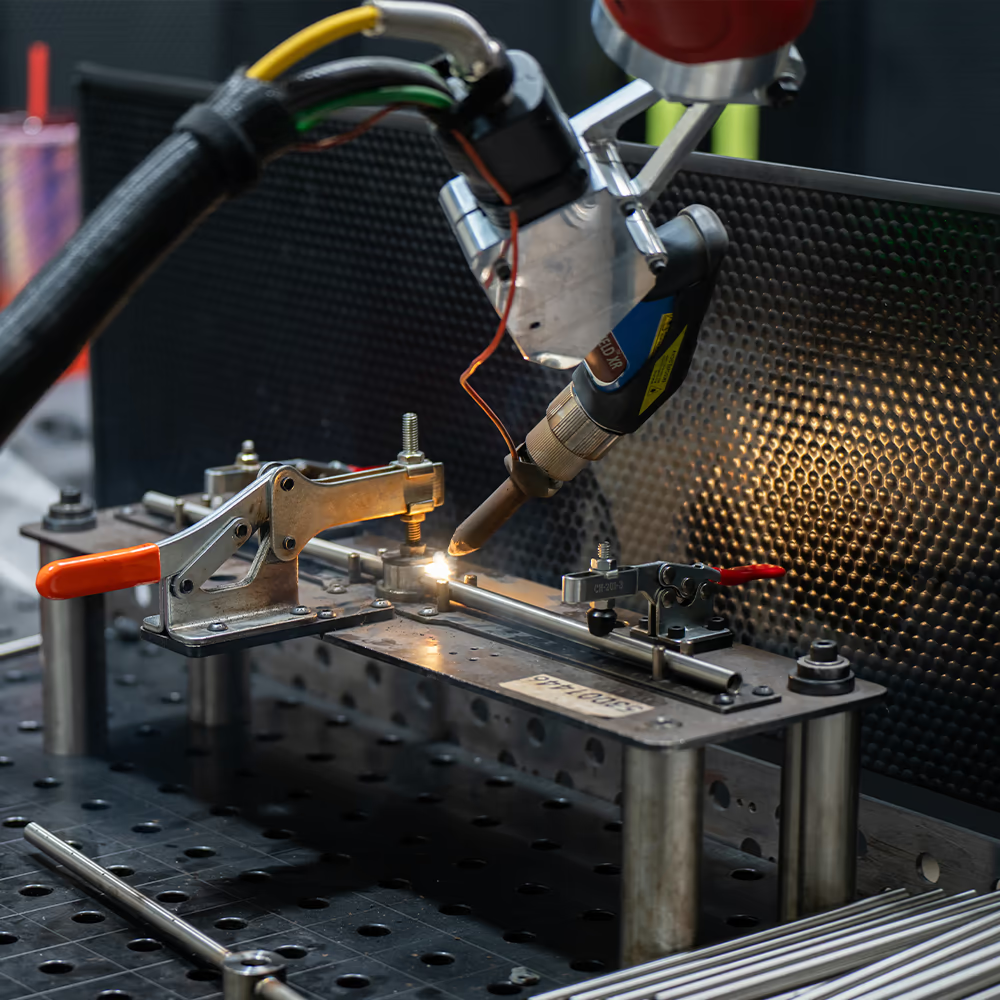
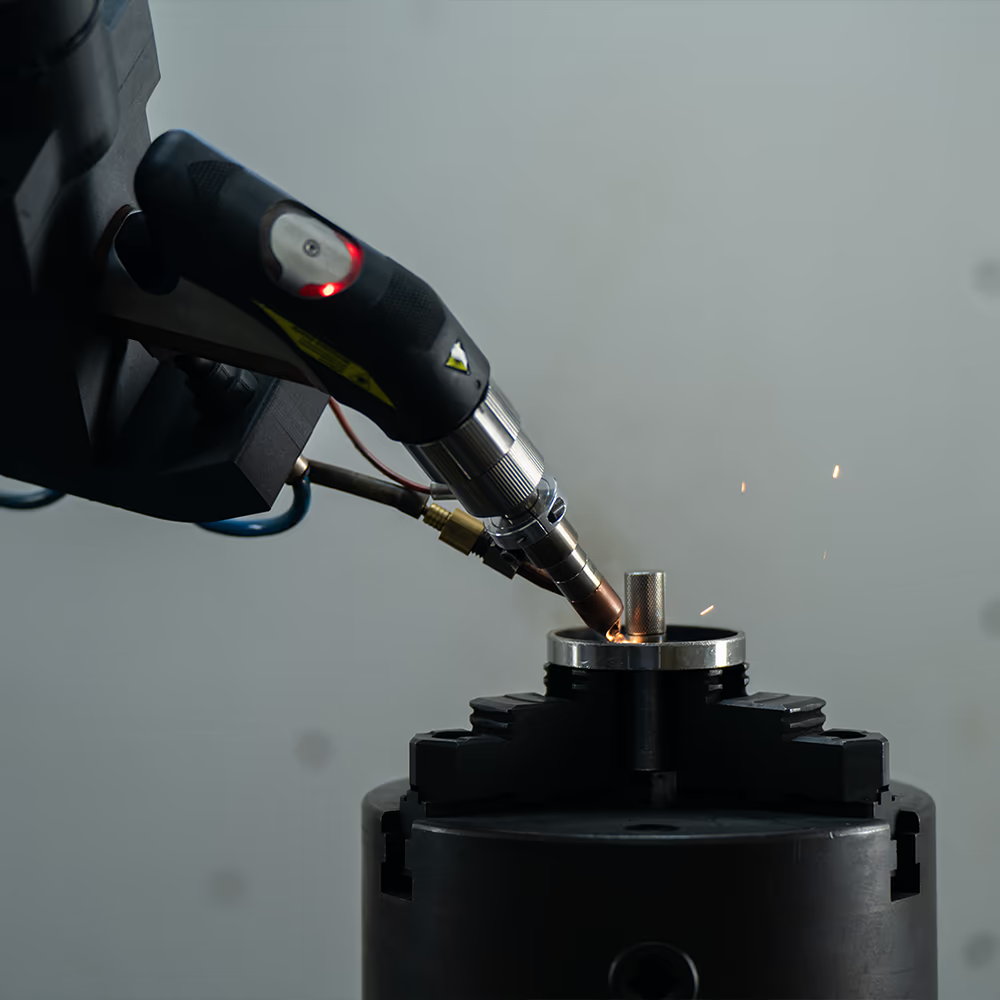
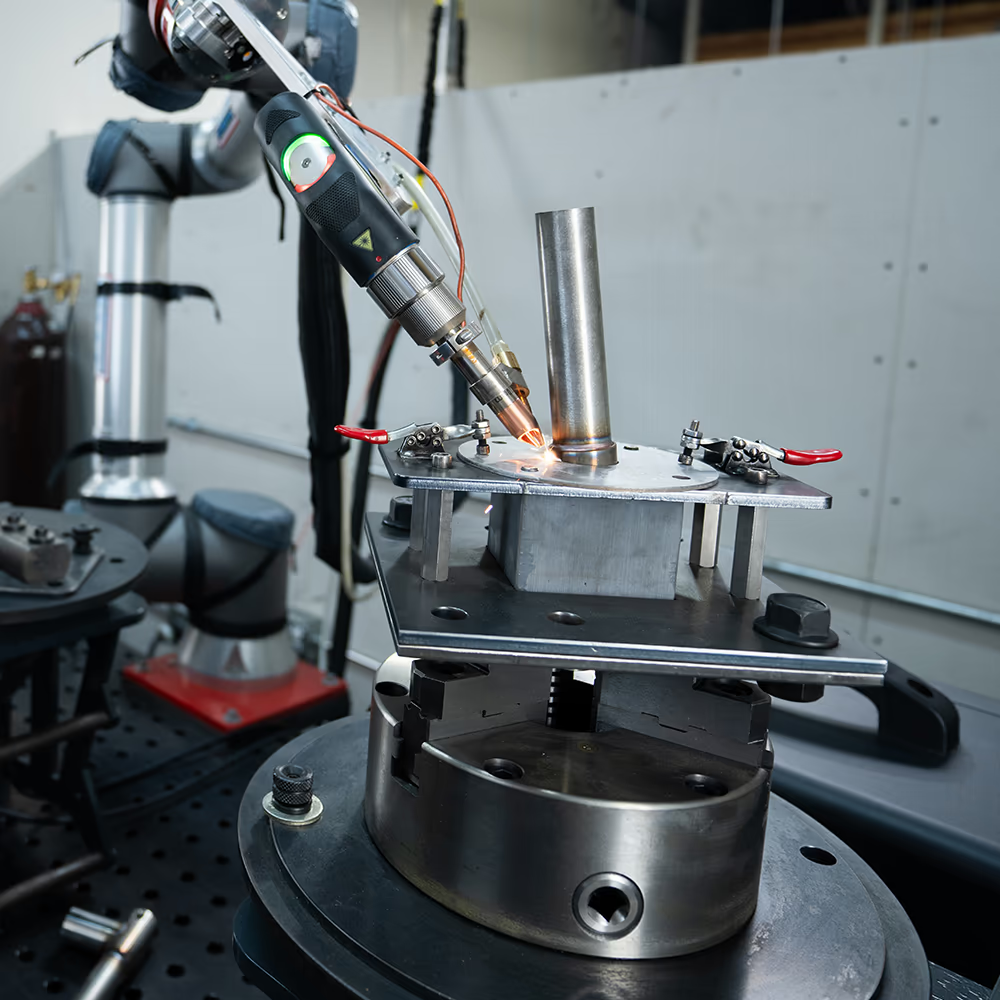







See THG Laser Welding Demo
Up to 4X
Faster than TIG, with much lower heat input.
Zero
Programming experience required.
No grinding
Most jobs don’t require any post processing.
High Welding Speed. Low Heat Input.
Fiber laser welding built for fast, precise, low-distortion production. Weld stainless, carbon steel, aluminum, copper, titanium, nickel alloys, and other supported materials. Dissimilar material welding is also possible, depending on metal pairs.
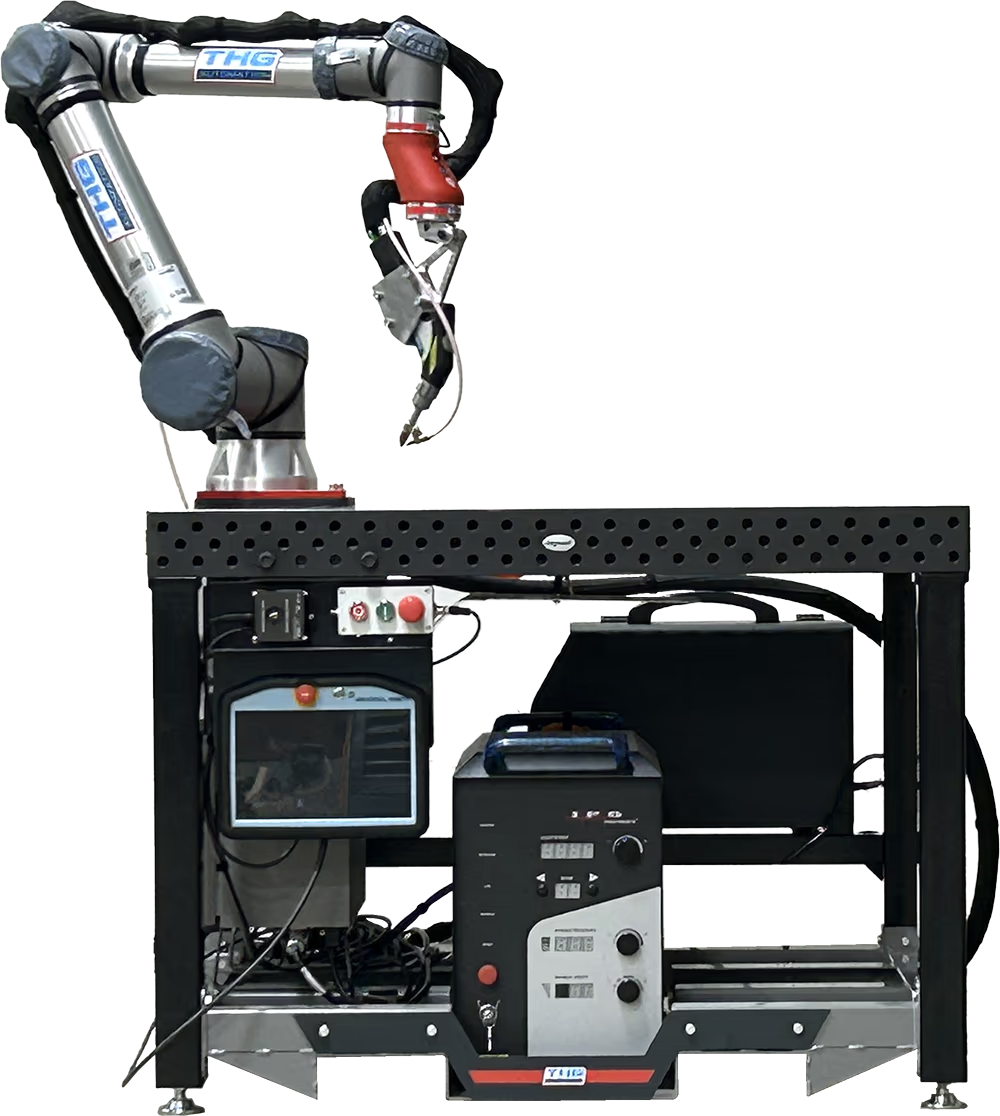
Go Beyond Simple Cobot Welding
Start with the system your parts require today. Add motion, reach, and processes as production changes. Positioners, coordinated motion, MultiMode, and linear tracks let THG automate larger parts and more complex weld paths without replacing the base system. Every option integrates into the same THG programming environment, so the system can expand as your applications and production requirements change.
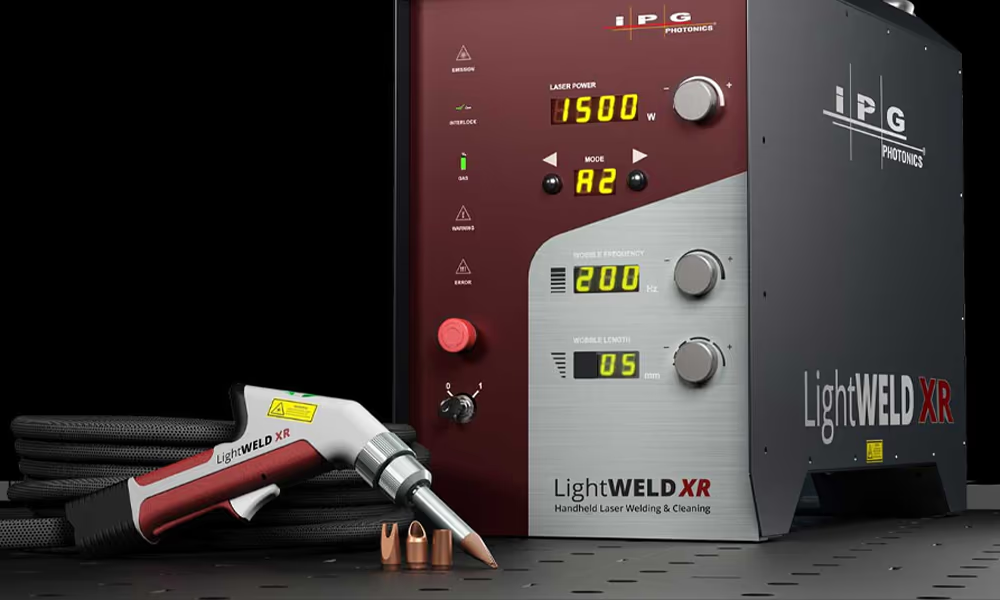
Power Source Options
Choose a 1500 W or 2000 W IPG LightWELD configuration based on material, thickness, joint design, and required production speed.
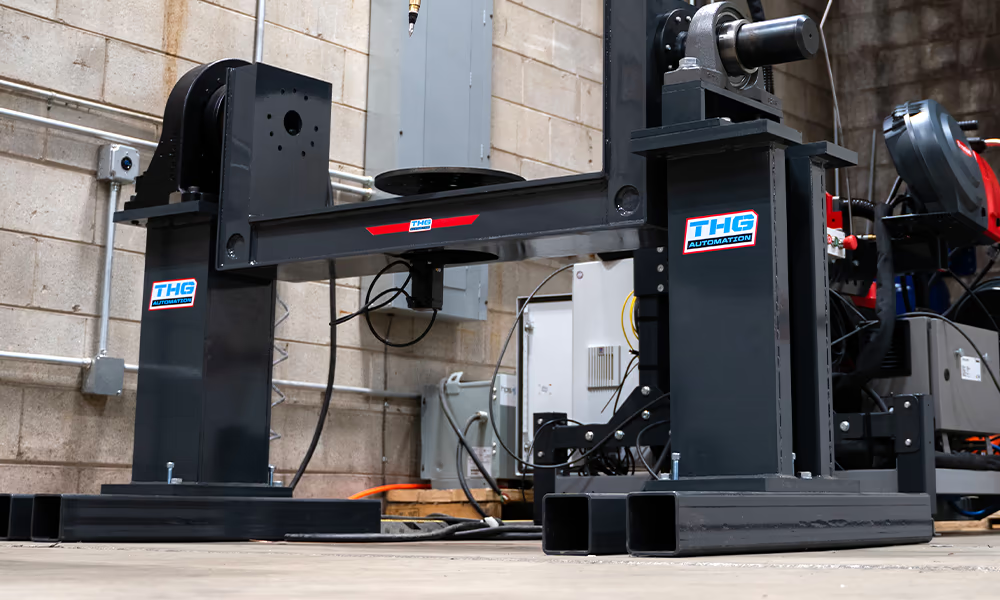
Positioners
Add rotary or linear positioners to rotate and orient parts for better torch access, fewer setups, and more consistent welding around complex geometry.
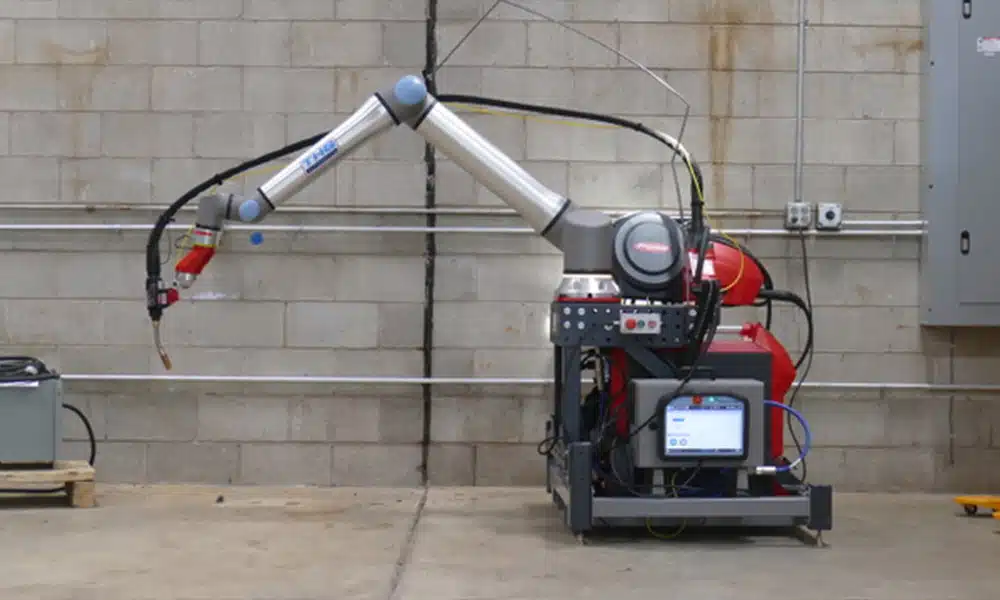
Mobile Platform
Move the complete laser welding system between work areas or production cells without rebuilding a dedicated fixed automation cell.
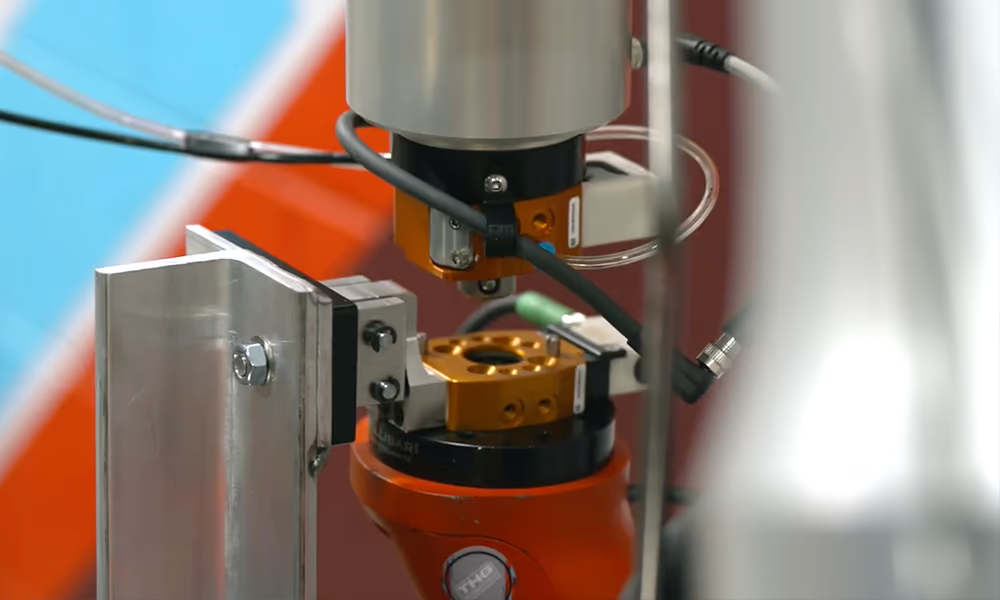
MultiMode
Combine any two THG-supported processes, whether welding or cutting. For example, combine TIG precision with MIG productivity in one cell. Or do Plasma/MIG, Laser/TIG, etc.
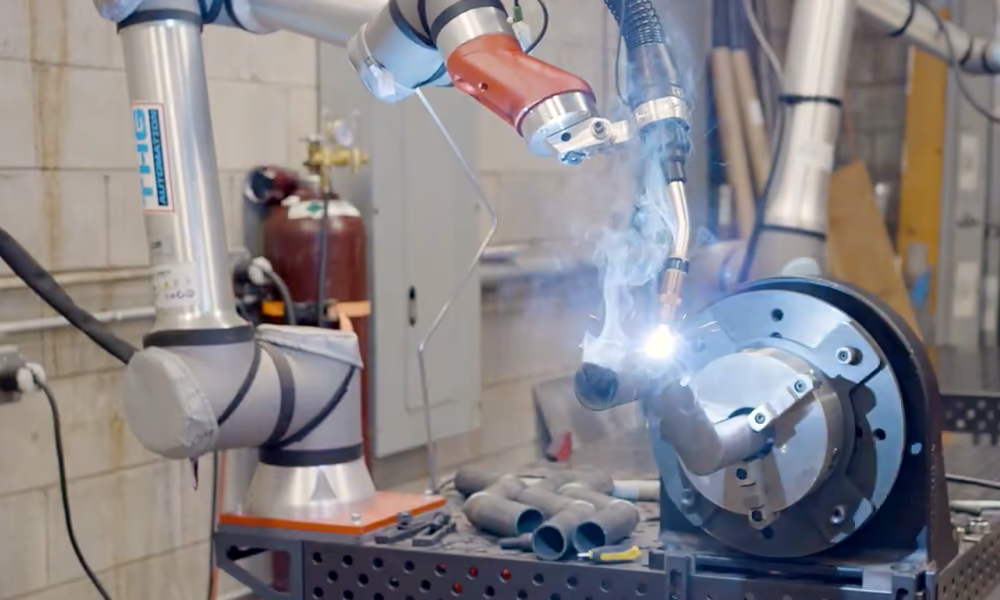
Coordinated Motion
Synchronize cobot and positioner movement to maintain torch orientation and travel speed while welding rotating, cylindrical, or complex parts.
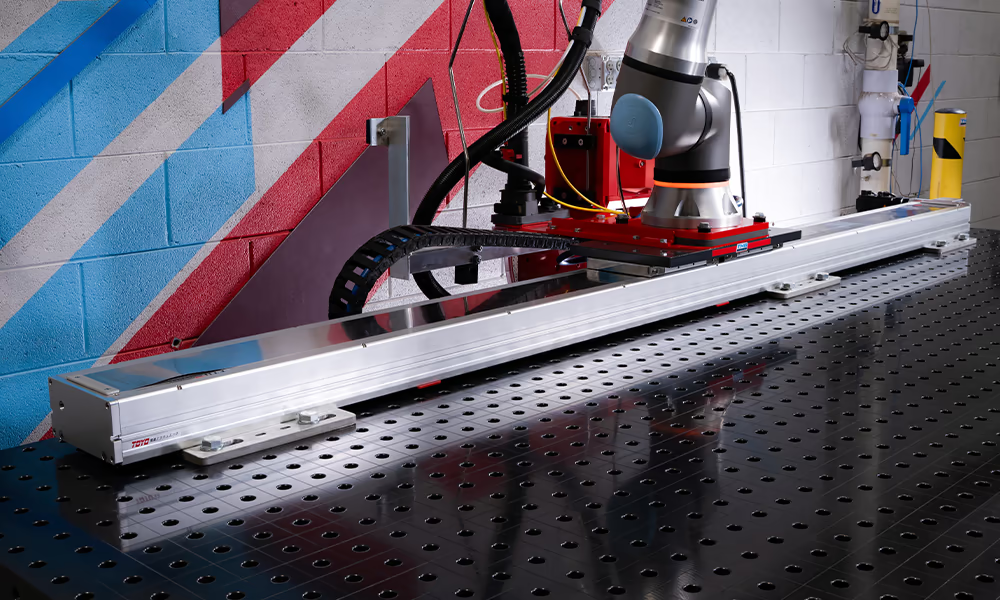
Linear Tracks
Extend cobot travel for long weldments, oversized parts, and applications that exceed the working envelope of a fixed robot position.
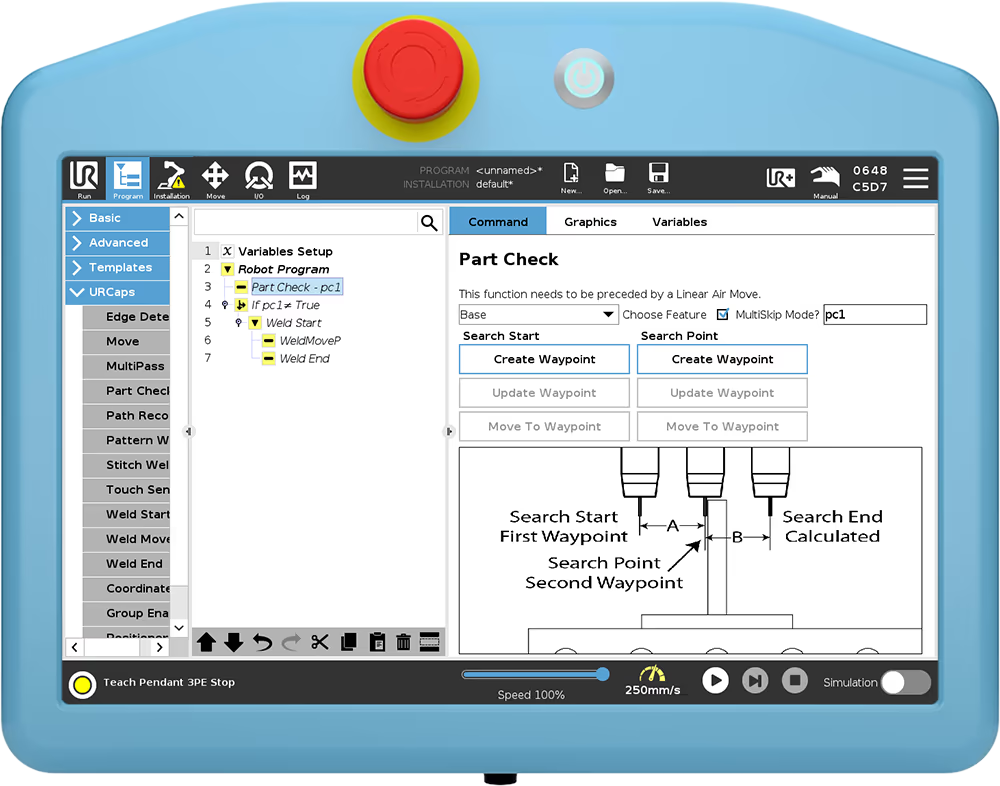
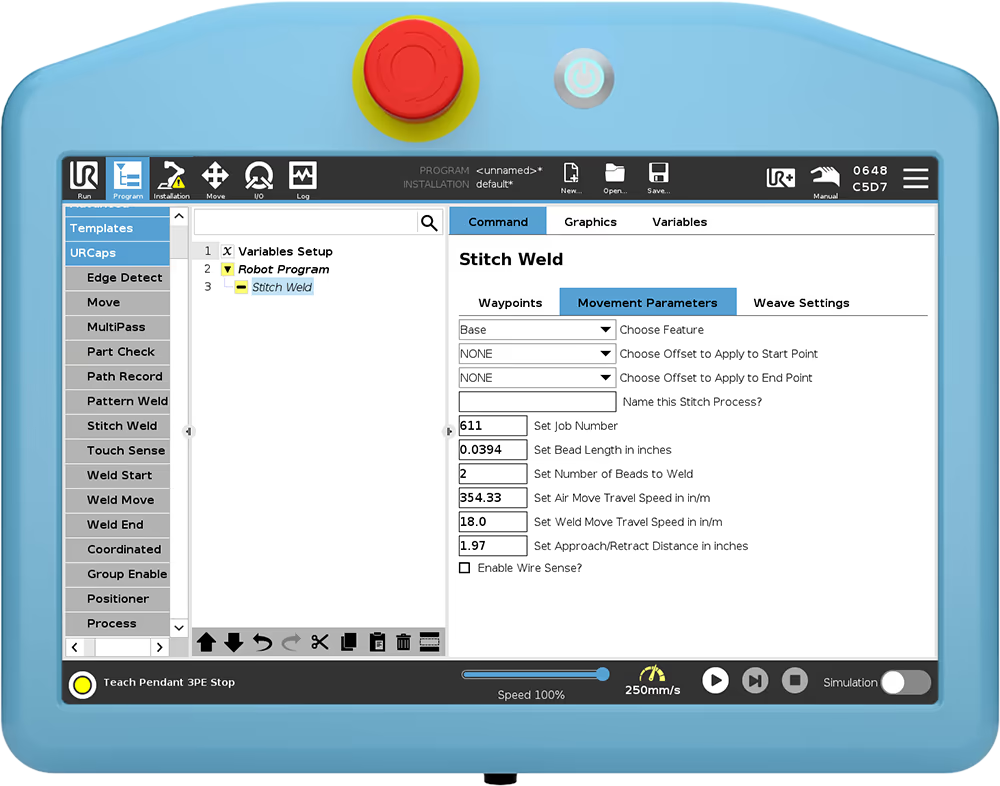
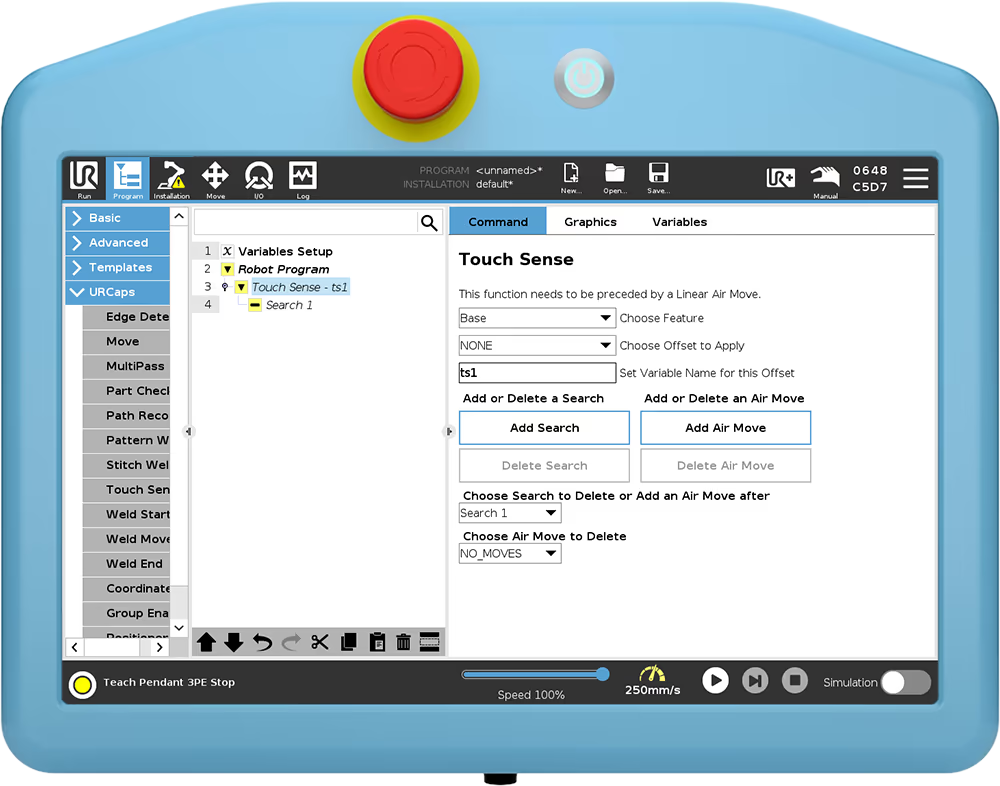
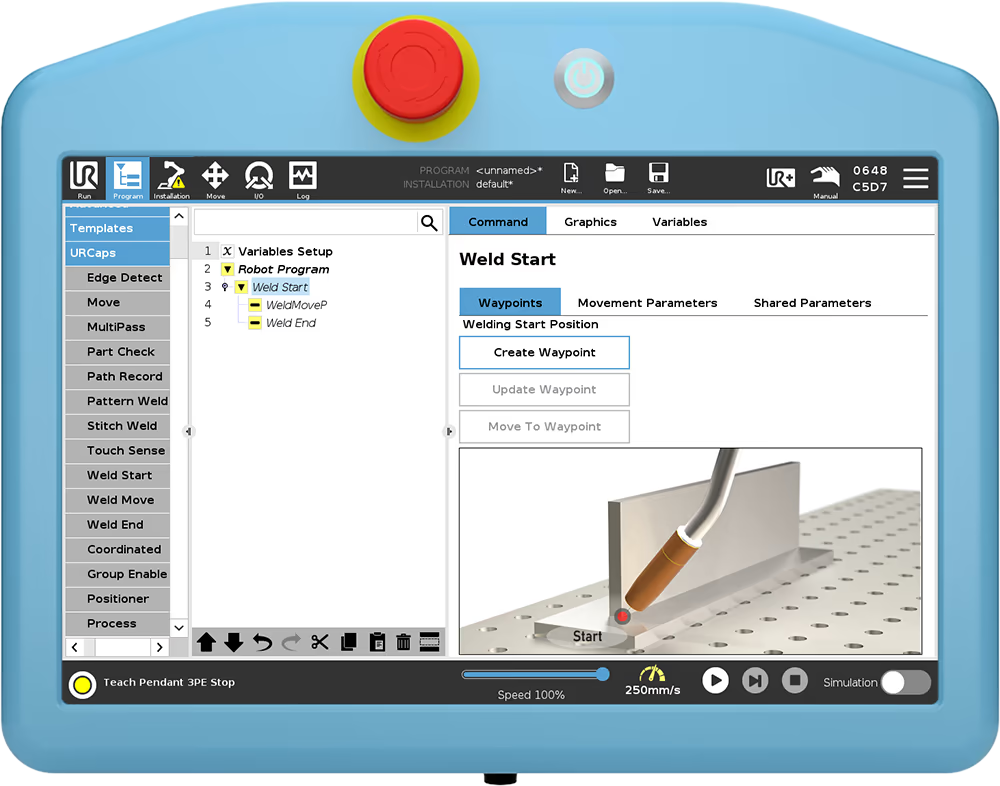
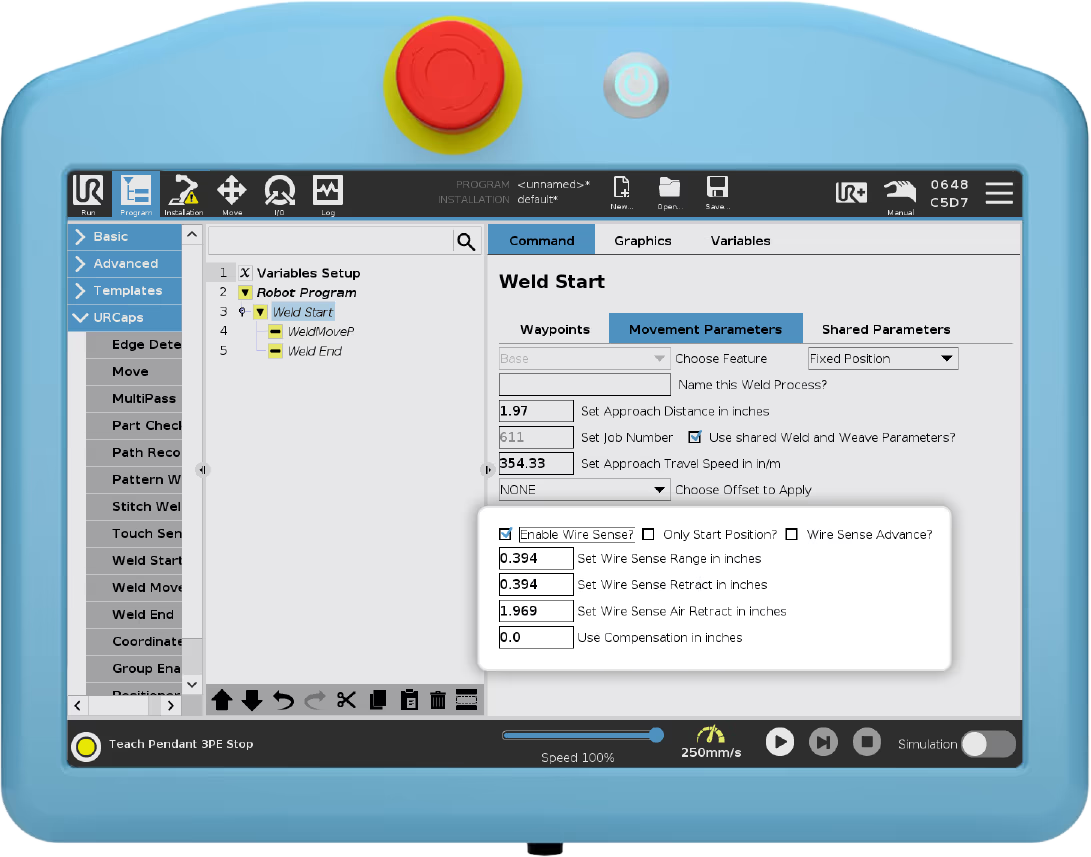
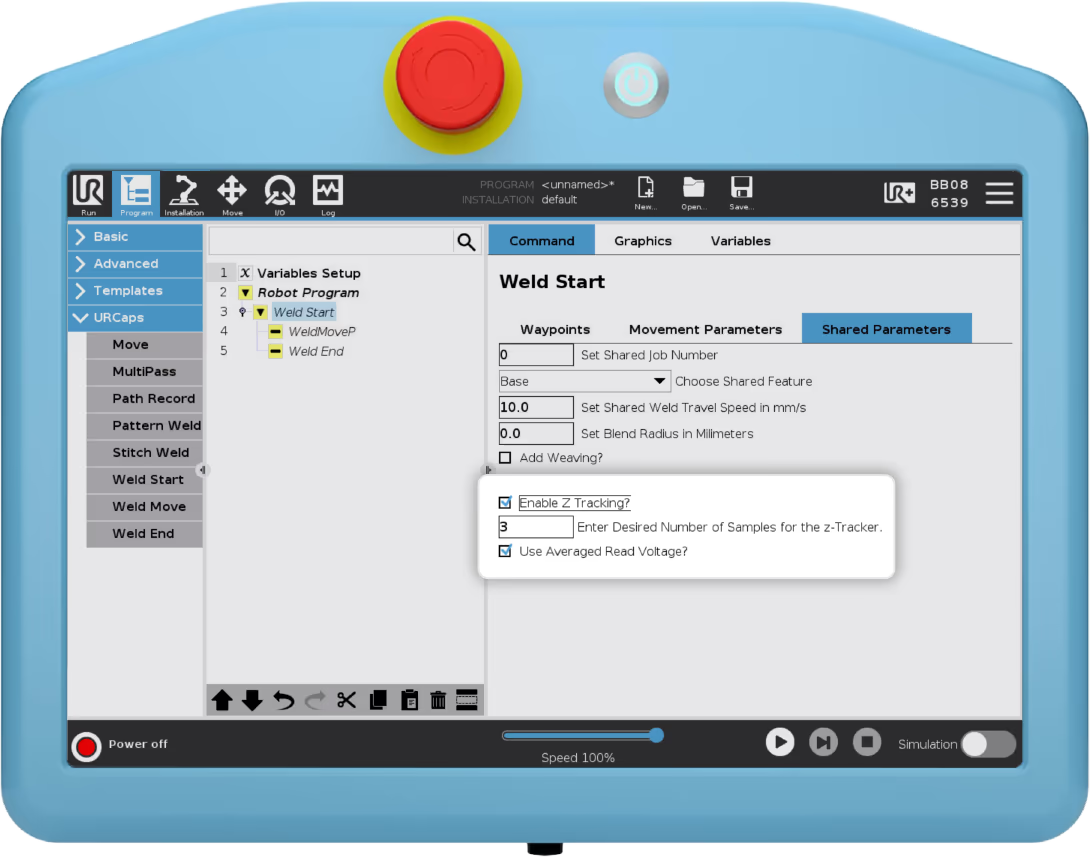
THG URCap Software.
Simplified Robotic Laser Welding.
Manually guide the robot arm to weld points. Define welding parameters in the THG’s graphical URCap interface. All done in minutes, even in multi-axis configurations.
THG proprietary URCap
Designed for welders
Full power source integration
Advanced welding motion and sensing capabilities programmed in minutes
IPG LightWeld For Robotic Laser Welding
THG uses IPG LightWELD for a broad welding process window in a compact platform. One system can handle precision seams, demanding materials, and higher-output production.
Customer Testimonials
Results From the Shop Floor
Small Race Shop Scaled Production 7× with a Collaborative Robotic Welding System
4X Productivity Gain with Collaborative Laser Welding Robots
How PikRite Solved Labor Shortages with Robotic MIG Welding
Built and Supported Where You Are
Looking for robotic welding automation in your region?
Contact THG Automation to discuss availability and support in your country.

United States
Design, integration, and support for manufacturers across the U.S.

Canada
Design, integration, and support for manufacturers across Canada.

Australia
Design, integration, and support for manufacturers across Australia.
Book a Demo.
See the System in Action.
Let’s discuss your parts and show you what’s possible. We’ll help you choose the right THG configuration you need today, with room to expand as your production needs grow.
Common Questions
Do I need laser welding or robotics experience to run a THG system?
No. THG laser welding systems use a graphical URCap interface, so operators can teach weld paths and manage jobs without writing robot code. THG also provides startup and operator training.
Can robotic laser welding use filler wire?
Yes. THG robotic laser systems support wire-fed welding when filler metal is needed for wider joints, larger beads, or additional fit-up tolerance. Autogenous welding is also supported when filler wire isn’t required.
Does robotic laser welding require a safety enclosure?
Yes. The IPG fiber laser is a Class 4 laser and requires a laser-safe enclosure with appropriate interlocks and PPE. THG integrates the required laser safety systems into the application.
Can the system weld round or complex parts?
Yes. Add THG positioners and Coordinated Motion to rotate the part while the cobot follows the weld path, maintaining torch orientation and travel speed around complex geometry.
Can laser welding handle poor part fit-up?
Laser welding generally requires consistent fit-up, but THG integrates LightWELD’s adjustable wobble width settings. Also, optional wire feeding can accommodate larger seams and joint gaps than autogenous laser welding alone.
What materials can a THG robotic laser welding system weld?
THG LightWELD systems can weld stainless steel, mild and galvanized steel, aluminum, nickel alloys, titanium, copper, and other supported metals. The right configuration depends on material, thickness, and joint design.
Can I expand my THG laser welding system later?
Yes. Add positioners, linear tracks, Coordinated Motion, MultiMode, or other supported THG options as your parts and production requirements change without replacing the base cobot platform.
How long does it take to get a system?
Two weeks average delivery time from order to installation.
Where do you support customers?
THG serves manufacturers across the US, Canada, and Australia. Canadian systems are built locally with no cross-border tariffs.